

Yes, you can clean and lube your own chain in about 20 minutes, and doing it correctly comes down to three rules. Use an O-ring or X-ring-safe cleaner (or plain kerosene), never a harsh solvent. Dry the chain completely before you lube it. Then apply a light, even film of lube to the inner face only, never a heavy coat you’ll be scrubbing off the rear tire later. If your bike needs a specific torque number or you’d rather hand it off, Dirty Birdy Powersports runs full-service chain appointments too.
TL;DR:
- Use an O-ring or X-ring-safe cleaner or kerosene and never a harsh solvent to avoid damaging the chain’s seals.
- Measure and adjust chain slack at the tightest point, aiming for about 20 to 30 millimeters, and check for wear signs like hooked sprockets.
- Clean the chain with a soft brush, dry thoroughly, and only rinse if the cleaner’s label instructs, then apply lube properly on the inner face.
- Lube the chain every 300 to 600 miles or more frequently if riding in rain, dust, or off-road conditions, and wipe off excess to prevent grime buildup.
- Book professional service if unsure about precise adjustments, or if the chain shows uneven wear, rust, or persistent slack that cannot be corrected manually.
Table of Contents
- Setting Up for Motorcycle Chain Cleaning: Tools and Workspace
- How to Clean a Motorcycle Chain Step by Step
- Which Motorcycle Chain Lube Should You Use?
- How Do You Check and Adjust Chain Slack?
- How Often Should You Clean and Lube a Motorcycle Chain?
- Chain Cleaning Safety and the Mistakes That Ruin Chains
- Why Trust Dirty Birdy Powersports on Motorcycle Chain Care
- Disposing of Used Chain Cleaner and Wipes Responsibly
- The Habit That Actually Saves You Money
- Book Chain Service or Shop Parts at Dirty Birdy Powersports
- Sources
Setting Up for Motorcycle Chain Cleaning: Tools and Workspace
Pick flat, level ground, a driveway or garage works fine, and throw down a piece of cardboard or an old tarp under the chain to catch overspray and grime. You don’t need a lift or a shop bay for this.
Here’s what actually earns a spot in your kit:
- Nitrile gloves (chain grime is genuinely nasty to get off your hands)
- An O-ring-safe chain cleaner or a can of kerosene
- A soft chain brush, the three-sided kind designed to hit rollers, side plates, and inner links in one pass, or an old toothbrush in a pinch
- Clean shop rags, several of them
- Chain lube, wet, wax, or dry depending on conditions
- A paddock stand or center stand, though you can work without one
Check the cleaner’s label before you buy. Some aerosol degreasers are meant to be wiped off dry, while others specifically call for a low-pressure rinse. That distinction changes how you handle runoff and what you do with the used rags afterward.
How to Clean a Motorcycle Chain Step by Step
Start with a short ride or a few minutes of idling to warm the chain slightly. This loosens grime and helps lube penetrate later, but let it cool until you can hold your hand on it comfortably. A hot chain isn’t dangerous exactly, but it’s uncomfortable to scrub and can flash off cleaner too fast to work.
Get the bike stable before you touch anything. A center or paddock stand is ideal because it lets you rotate the rear wheel freely. If you’re on the road without one, work in sections: lean the bike on its sidestand, clean and lube whatever section of chain you can reach, roll the bike forward a few feet, and repeat until you’ve covered the full loop. It’s slower, but it works fine for touring riders who don’t carry a stand.
- Slide cardboard behind the chain to protect your rear wheel and swingarm paint from overspray.
- Spray an O-ring-safe cleaner or apply kerosene along the chain, avoiding the wheel bearings and swingarm pivot seals entirely.
- Let it dwell for two to three minutes so it can break down road grime and old lube residue.
- Scrub the inner links, rollers, and side plates with your soft brush, rotating the wheel by hand as you go.
- Wipe the chain down with a clean rag, then repeat the process on any stubborn, caked-on sections.
- For genuinely filthy chains, a low-to-medium pressure wash can knock loose grime a brush can’t touch, but keep the stream well away from seals and bearings, and plan on re-lubricating immediately after.
Rinse only if your cleaner’s label says to. If it does, use low water pressure and dry the chain thoroughly afterward, water left sitting under fresh lube just invites rust.
Pro Tip: Engine off, transmission in neutral, and rotate the rear wheel by hand the entire time. Never let the chain move under its own power while you’re touching it.
Never reach for a wire brush here. The steel bristles nick and tear O-rings, which is the one mistake on this whole list you genuinely cannot undo once it happens.
Which Motorcycle Chain Lube Should You Use?
Once the chain is bone dry, you’ve got three real options for lube:
- Wet lube holds up best in rain and wet climates but attracts more road grime between cleanings
- Wax or tack-based lube dries to a cleaner finish and slings less onto your wheel, though it needs more frequent reapplication
- Dry or PTFE-based lube works well in dusty or off-road conditions where grit buildup is the bigger enemy
Whatever you pick, confirm it’s labeled O-ring or X-ring safe. That’s non-negotiable on any modern sealed chain.
Application matters just as much as the product itself. Aim the nozzle at the inner face of the chain, roughly an inch away, and rotate the rear wheel by hand through one full revolution as you spray. Centrifugal force does the rest, pulling the lube through the rollers and onto the parts that actually need it.
You’re after a light, glossy film, not drips running down the side plates. Riders routinely over-apply lube, and a soaked chain just becomes a dirt magnet that flings grime onto your swingarm and rear wheel within a few miles.
Lube penetrates noticeably better into a chain that’s still slightly warm from your earlier warm-up ride. Give it 3 to 10 minutes to soak in before you ride, longer if you rinsed with water. Once it’s set, wipe down the outer plates and check your tire and rim for any stray overspray. A little lube on your rear tire is a genuine traction problem, not just a cosmetic one.
How Do You Check and Adjust Chain Slack?
Chains don’t wear evenly, so measuring slack at just any point on the loop gives you a false reading. Find the tightest spot by rotating the wheel slowly with the bike’s weight settled on its suspension, then measure the vertical play there, not at whatever section happens to be in front of you.
- Always measure at the tightest point, since setting slack anywhere else leaves dangerous loose spots elsewhere on the loop
- Check your owner’s manual for the exact spec. Road bikes commonly fall somewhere in the 20 to 30 mm range, but treat that as a ballpark, not your bike’s actual number
- Adjust both sides evenly using the swingarm adjusters, then torque the axle nut to spec and double check the alignment marks match on each side
- Replace the chain and sprockets, not just the chain, when you see hooked or pointed sprocket teeth, rusted or frozen links, or slack that won’t come into spec no matter how far you turn the adjusters
If any of that sounds like more precision than you want to eyeball in your driveway, that’s exactly the kind of check worth booking with a shop, especially if your bike’s torque specs aren’t something you have memorized.
How Often Should You Clean and Lube a Motorcycle Chain?
Forget rigid mileage charts. Chain care is driven by conditions, not the odometer.
- A reasonable baseline for sealed chains is every 300 to 600 miles (500 to 1,000 km), adjusted up or down based on how you actually ride
- Ridden through rain? Lube it again once things dry out, water strips protective film fast
- Spent a day on dusty gravel or off-road trails? That chain needs attention sooner than your street-only commuter bike
- Heading out on a multi-day tour? Lube more frequently along the way and plan a proper deep clean once you’re home
- Tie the check into something you already do, like your oil change interval or a pre-ride walkaround, so it doesn’t slip your mind
Chain Cleaning Safety and the Mistakes That Ruin Chains
The single biggest hazard here is working on a chain that’s still capable of moving. Severe finger injuries happen when riders clean or lube a chain without confirming the engine is off and the bike is in neutral. Rotate the wheel by hand only, and never by starting the engine or bump-starting it in gear.
- Skip the wire brush entirely on any O-ring or X-ring chain, it tears the seals and lets grease escape from inside the rollers
- Avoid gasoline, brake cleaner, or other harsh solvents, since these swell or degrade rubber seals the same way a wire brush destroys them mechanically
- Don’t over-lube. Wipe off excess so it doesn’t fling onto your rear tire or brake rotor
- Keep solvent sprays and high-pressure water away from wheel bearings and swingarm pivot seals
Pro Tip: Wear gloves and keep loose sleeves or gear away from the chain the entire time, even when the bike is off. A stiff spring in the tensioner or a shifted wheel can still pinch a finger.
Why Trust Dirty Birdy Powersports on Motorcycle Chain Care
Dirty Birdy Powersports is a CFMOTO dealership where the people advising you actually ride the machines they sell, not just move paperwork on them. That matters when you’re asking questions about chain wear patterns or whether your slack numbers look right for your specific model.
- The team has handled over 200 nationwide deliveries with a 5.0 Google rating, built on riders who come back with real maintenance questions
- Need exact numbers instead of ballpark figures? Check the CFMOTO maintenance schedule or the torque spec guide for your model
- If you’d rather have someone else check tension and alignment, especially early in a new bike’s life covered in the break-in guide, booking a shop visit takes the guesswork out of it
Disposing of Used Chain Cleaner and Wipes Responsibly
Used chain cleaner, whether it’s a commercial O-ring-safe product or kerosene, isn’t something you pour down a storm drain or dump on the ground. Both carry degreasers and dissolved grime that can contaminate soil and waterways, and most municipalities classify used solvents as household hazardous waste, not regular trash.
Let used cleaner and any rinse runoff collect in a sealed container rather than letting it soak into a gravel driveway or run into a nearby drain. Most cities and counties operate a household hazardous waste drop-off program that accepts exactly this kind of automotive fluid, often the same facility that takes used motor oil. A quick search for your municipality’s hazardous waste program will usually turn up drop-off hours and accepted materials.
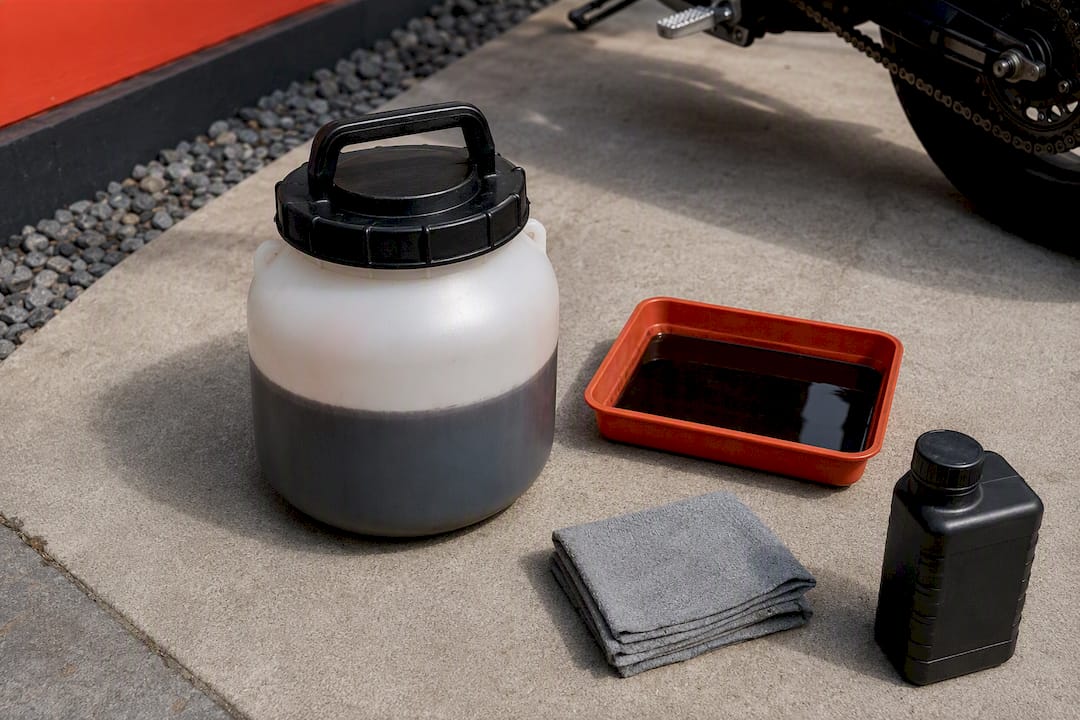
Rags and shop towels soaked in chain cleaner or lube are a genuine fire risk if you just toss them in a regular trash bin, oily rags can spontaneously combust as they oxidize in a pile. Let used rags air out flat outdoors before disposal, or better yet, launder reusable shop rags separately from other laundry rather than throwing disposable ones away every time. If you’re using an aerosol cleaner, don’t puncture or incinerate the empty can. Most curbside recycling programs accept empty aerosol cans once they’re fully spent, but check your local rules first since policies vary by municipality.
The Habit That Actually Saves You Money
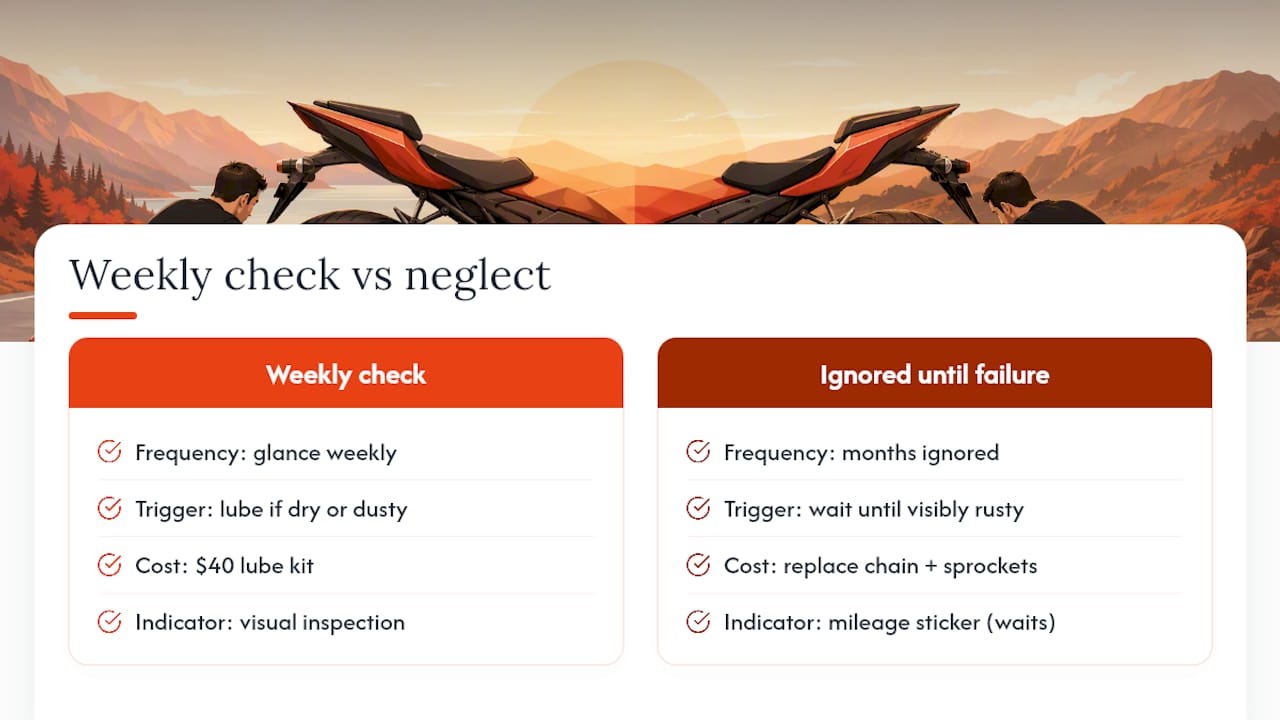
I’ve seen more than a few chains fail well before their time, not from bad luck, but from months of being ignored until they looked visibly rusty or started skipping under load. By that point, you’re not buying a $40 lube kit, you’re buying a new chain and a matched set of sprockets.
The fix isn’t complicated. Glance at your chain every week. If it looks dry or dusty, lube it. Don’t wait for a mileage number on a sticker to tell you it’s time.
— Dirty
Book Chain Service or Shop Parts at Dirty Birdy Powersports
If you’d rather not spend your Saturday morning elbow-deep in degreaser, Dirty Birdy Powersports runs full chain-clean-and-lube service appointments alongside proper tension checks done with the right tools and torque specs for your exact model.

That’s the honest case for booking a pro visit: you skip the guesswork on slack numbers, torque values, and lube compatibility, and you get someone who’s actually ridden the machine looking it over instead of guessing from a chart. This makes the most sense if you don’t own a chain brush and stand yet, if you spotted uneven wear or hooked sprocket teeth during your last inspection, or if you just want a second set of eyes before a long tour. Browse the full lineup at Dirty Birdy Powersports for parts, supplies, and accessories, or reach out directly to book a service slot and get your chain squared away before your next ride.
Sources
- How to Clean and Lube a Motorcycle Chain: 2026 Guide
- Motorcycle Chain Cleaning: How to Clean, Lube, and Adjust Like a Pro - Revv Rider
- Motorcycle
- How To Clean Motorcycle Chain at Home – Complete Guide 2026 | MotoARZT