

For 2026, the Royal Enfield Himalayan 450 leads the lightweight class: it weighs under 200 kg, sits at a manageable seat height, and is priced affordably in most markets. The Yamaha Ténéré 700 is the middleweight to beat, combining a proven 689cc CP2 twin with a rally-derived chassis and a reputation for reliability that no amount of electronics can replace. At the top end, the BMW R1300 GS Adventure sets the standard for heavyweight touring with a large fuel tank, IMU-based rider aids, and a 6.5-inch TFT display that makes long-distance navigation genuinely effortless. Full class-by-class profiles, spec tables, and buying guidance follow below.
- Lightweight pick: Royal Enfield Himalayan 450 — low weight, low seat, low cost, real off-road geometry
- Middleweight pick: Yamaha Ténéré 700 — rally chassis, simple mechanics, cult following since its U.S. debut
- Heavyweight pick: BMW R1300 GS Adventure — 7.9-gallon range, full electronics suite, the benchmark long-hauler
Table of Contents
- The best adventure motorcycles 2026: quick comparison
- Lightweight adventure motorcycles that are worth your time in 2026
- Middleweight adventure bikes that suit most riders in 2026
- Heavyweight adventure motorcycles for long-range touring in 2026
- Why middleweight adventure bikes make sense for most riders
- Key Takeaways
- The honest take on 2026 adventure bikes
- Further reading and resources for 2026 ADV buyers
- Gear up for your next adventure with Dirtybirdypowersports
The best adventure motorcycles 2026: quick comparison
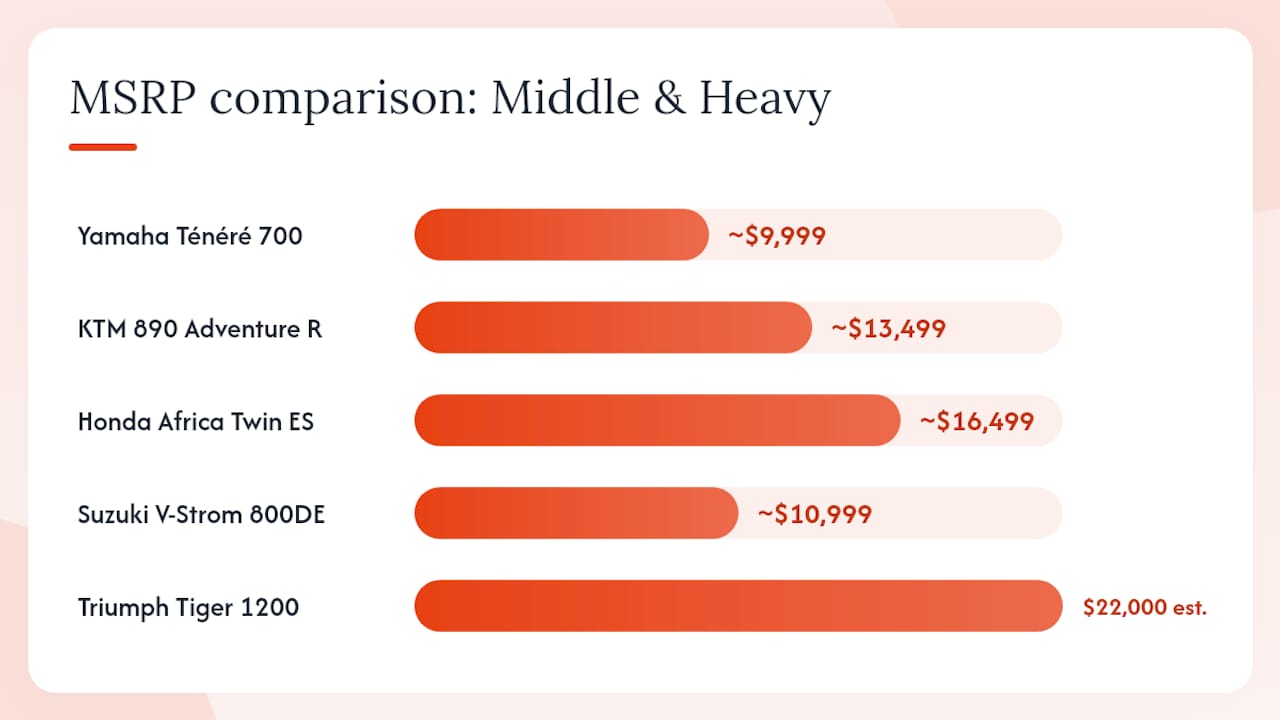
The ten models below cover every class and budget. MSRP figures are U.S. estimates for 2026 model-year bikes; “est.” marks cases where the manufacturer had not published a final U.S. price at time of writing. Use this table to narrow your test-ride shortlist fast.
| Model | Class | Best For | MSRP (USD, 2026) |
|---|---|---|---|
| Royal Enfield Himalayan 450 | Lightweight | Beginners, tight trails, low budget | — |
| KTM 390 Adventure | Lightweight | Shorter riders, entry ADV geometry | — |
| Yamaha Ténéré 700 | Middleweight | Dirt-focused, reliable, minimal electronics | ~$9,999 |
| KTM 890 Adventure R | Middleweight | Technical off-road, experienced riders | ~$13,499 |
| Honda Africa Twin Adventure Sports ES | Middleweight | Mixed touring, semi-active suspension | ~$16,499 |
| Suzuki V-Strom 800DE | Middleweight | Value touring, everyday versatility | ~$10,999 |
| Triumph Tiger 1200 Rally Explorer | Heavyweight | Long-range two-up, premium tech | ~$22,000 est. |
| Suzuki V-Strom 1050DE | Heavyweight | Accessible heavyweight, strong dealer network | — |
| KTM 1390 Super Adventure R | Heavyweight | High-power road-biased touring | — |
| BMW R1300 GS Adventure | Heavyweight | Long-range touring, full electronics | — |
Ducati Multistrada V4 Rally and Triumph Tiger 1200 Desert editions are also covered in the heavyweight section below.
Lightweight adventure motorcycles that are worth your time in 2026
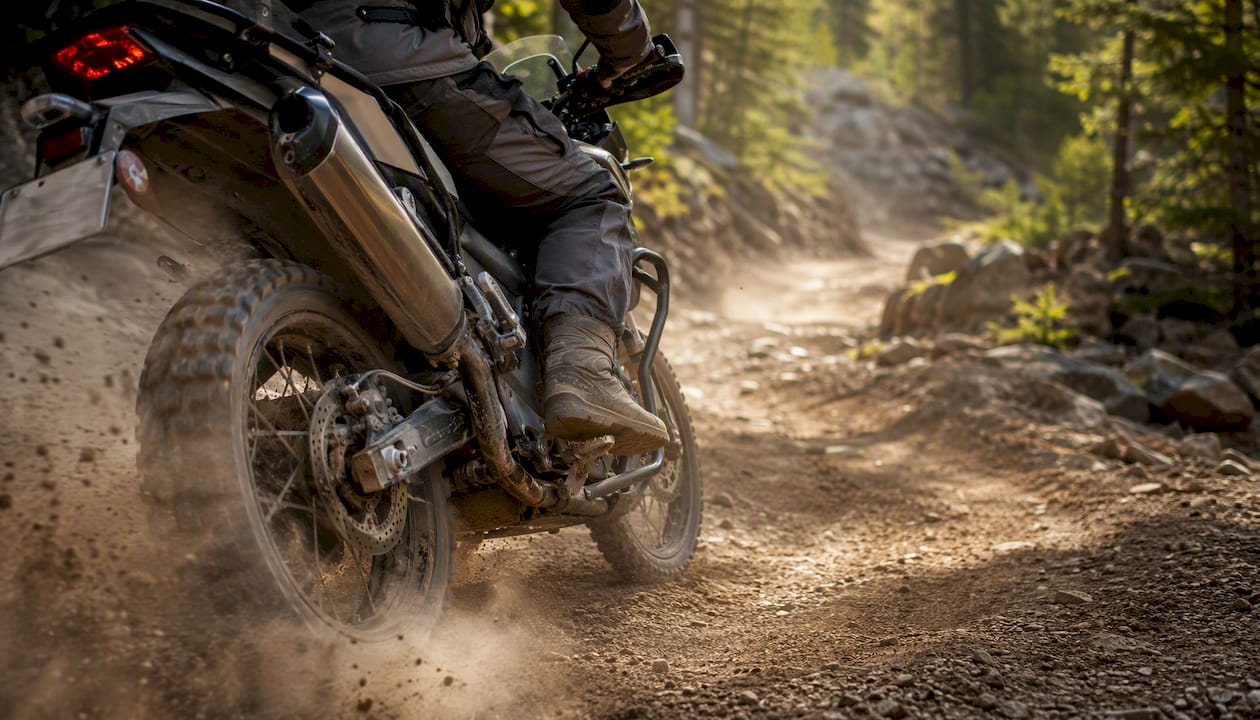
Lightweight ADVs have grown up. The best 2026 options offer full-size geometry at manageable weights, making them genuinely capable rather than just beginner-friendly compromises. Per the Top 10 Adventure Motorcycles for 2026, the KTM 390 Adventure now uses a new LC4c 399cc engine paired with 21-/18-inch spoked wheels, giving it authentic off-road geometry at an entry price.
| Model | Engine | Wet Weight | Seat Height | Wheels | MSRP |
|---|---|---|---|---|---|
| Royal Enfield Himalayan 450 | 452cc single | — | — | 21/18 in | — |
| KTM 390 Adventure | 399cc single | — | 855 mm | 21/18 in | — |
Royal Enfield Himalayan 450
The Himalayan 450 is the most accessible full-geometry ADV on the market. Its 452cc single produces enough torque for loaded trail riding, the seat adjusts to accommodate shorter inseams, and the price leaves money for gear and accessories. Maintenance is straightforward enough that most owners handle basic service themselves. The trade-off is modest highway speed comfort on long interstate stretches, but for the rider whose typical day involves gravel roads and the occasional trail, nothing at this price comes close.
Pros: Low cost, adjustable seat, simple mechanics, genuine 21-inch front wheel. Cons: Limited electronics, modest top-end power, less refined highway manners. Best for: First-time ADV buyers, shorter riders, budget-conscious trail explorers.
KTM 390 Adventure
KTM’s entry ADV punches above its displacement with proper WP suspension, a 21-inch front wheel, and a chassis that traces its DNA directly to KTM’s off-road line. The new LC4c engine is smoother than the outgoing unit and pairs with a six-axis IMU for cornering ABS. It costs a bit more than the Himalayan but delivers noticeably sharper handling on technical terrain.
Pros: IMU-based ABS, proper off-road geometry, KTM dealer network. Cons: Small fuel tank limits range, higher seat height than the Himalayan, service intervals require attention. Best for: Riders who want KTM DNA at an accessible price, experienced riders on a budget.
Middleweight adventure bikes that suit most riders in 2026
The middleweight class is where the best adv bikes 2026 argument gets made most convincingly. These bikes typically weigh 200–230 kg wet, combine enough power for two-up touring, and cost significantly less than the heavyweight flagships. For most riders, one of these four is the right answer.
Yamaha Ténéré 700
The T7 remains the benchmark for riders who want real off-road capability without a computer science degree to operate it. Its 689cc CP2 twin is famously reliable, the rally-derived chassis tracks predictably in loose terrain, and the minimal electronics package means less to go wrong on a remote trip. The U.S. market has embraced it since its 2022 arrival, and the aftermarket support is now deep. If your rides involve more dirt than motorway, this is the shortlist starter.
- Engine: 689cc parallel twin
- Wet weight: ~204 kg
- Seat height: 875 mm
- Wheels: 21/18 in
- MSRP: ~$9,999
KTM 890 Adventure R
The 890 R is the Ténéré’s more aggressive sibling in terms of off-road intent. WP XPLOR suspension with 240 mm of travel, a 21-inch front wheel, and a 889cc parallel twin that makes strong mid-range power. It costs more and demands more skill, but riders who spend serious time on technical terrain will find it more capable than anything else in the class. The electronics package is more complete than the T7’s, including multiple ABS modes and traction control.
- Engine: 889cc parallel twin
- Wet weight: ~189 kg
- Seat height: 880 mm (low) / 900 mm (high)
- Wheels: 21/18 in
- MSRP: ~$13,499
Honda Africa Twin Adventure Sports ES
The Africa Twin Adventure Sports ES splits the difference between dirt-capable and road-comfortable better than almost anything in this class. The semi-active Showa EERA suspension adjusts in real time, the DCT option removes the clutch from the equation entirely (useful for technical low-speed work), and Honda’s dealer network is the strongest in the U.S. for long-distance reliability. It weighs more than the T7 or the 890 R, but the electronics sophistication justifies it for riders who mix pavement and gravel.
- Engine: 1084cc parallel twin
- Wet weight: ~238 kg (ES)
- Seat height: 850 mm (low) / 870 mm (high)
- Wheels: 21/18 in
- MSRP: ~$16,499
Suzuki V-Strom 800DE
The V-Strom 800DE is the value case in the middleweight class. Suzuki’s 776cc V-twin delivers smooth, predictable power, the 21-inch front wheel is genuine, and the price undercuts most competitors by a meaningful margin. It is not the most exciting bike on this list, but it is one of the most practical: comfortable ergonomics, strong Suzuki dealer coverage, and a reputation for low maintenance costs. For a rider who wants a capable daily machine that handles weekend gravel without drama, the 800DE makes a strong argument.
- Engine: 776cc V-twin
- Wet weight: midweight wet weight
- Seat height: 855 mm
- Wheels: 21/18 in
- MSRP: ~$10,999
Heavyweight adventure motorcycles for long-range touring in 2026
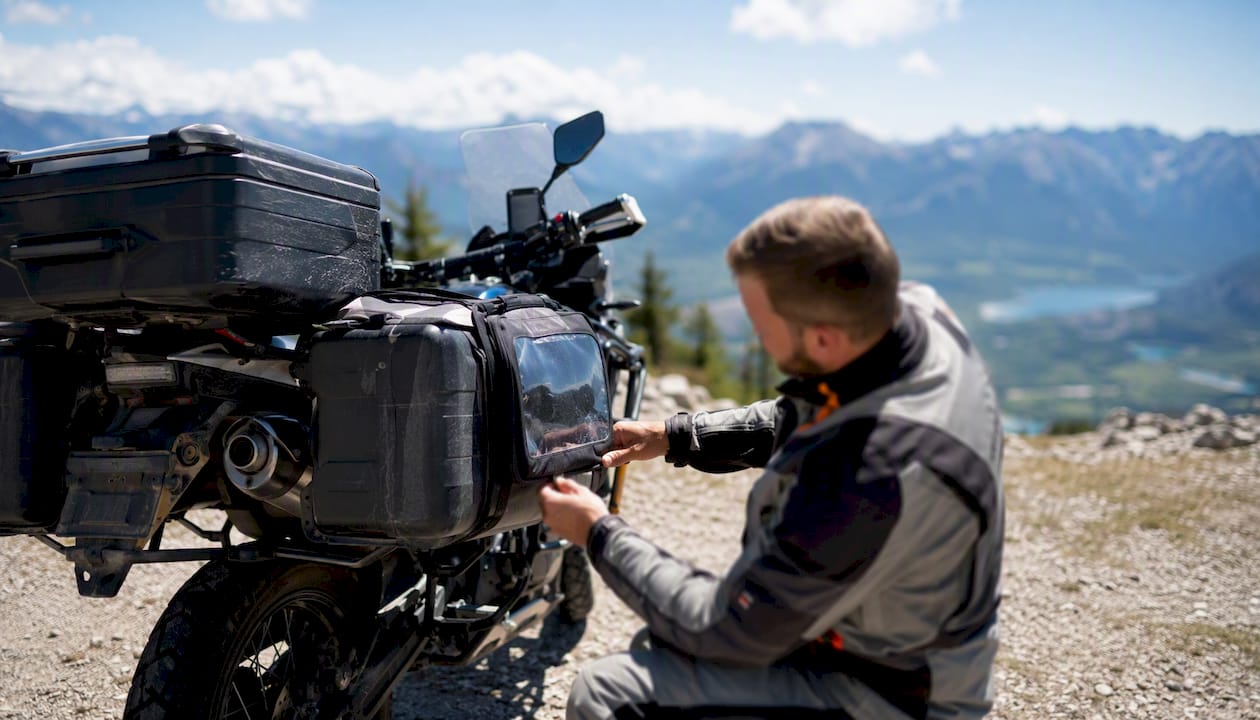
Heavyweights are purpose-built for riders who cover serious miles, carry a passenger and full luggage, and want technology to manage the fatigue. The 2026 ADVENTURE BIKE BUYER’S GUIDE details how the BMW R1300 GS Adventure and KTM 1390 Super Adventure R anchor this class with very different philosophies.
| Model | Engine | Fuel Capacity | Key Electronics | Wet Weight | MSRP |
|---|---|---|---|---|---|
| BMW R1300 GS Adventure | 1300cc boxer twin | large fuel tank | IMU, 4 modes, semi-active susp., 6.5" TFT | ~268 kg | — |
| KTM 1390 Super Adventure R | large-displacement V-twin | 7.9 gallons | IMU, semi-active WP XPLOR, cornering ABS | heavyweight wet weight | — |
| Ducati Multistrada V4 Rally | 1160cc triple | large fuel tank | DVO-derived electronics, semi-active susp. | — | — |
| Triumph Tiger 1200 Rally Explorer | 1160cc triple | 7.9 gallons | IMU, semi-active susp., 20-liter panniers std. | — | ~$22,000 est. |
| Suzuki V-Strom 1050DE | 1084cc parallel twin | — | IMU, cornering ABS, traction control | — | — |
BMW R1300 GS Adventure is the benchmark for a reason. That a large fuel tank translates to a realistic 350-plus-mile range before you need to stop, and the IMU-based safety systems work quietly in the background across all four riding modes. The 6.5-inch TFT display handles navigation, connectivity, and ride data without requiring you to stop and squint. It is heavy and expensive, but no other bike in this class covers ground as effortlessly over a full day.
KTM 1390 Super Adventure R claims 173 horsepower from its large-displacement V-twin, making it the most powerful production ADV available. The semi-active WP XPLOR suspension and 21-/18-inch spoke wheels give it more off-road credibility than its power figure suggests, but this is fundamentally a road-focused machine. Riders who want the fastest ADV on a highway will find nothing quicker; riders who want the most capable off-road heavyweight should look at the Tiger or the GS.
Ducati Multistrada V4 Rally is the electronics showcase of the class. The DVO-derived semi-active suspension and the V4’s character make it the most engaging heavyweight to ride on tarmac. Per BikeBound’s 2026 roundup, Ducati updated the V4 Rally with advanced electronics that push on-road stability to a new level. The price is steep and the service network is thinner than BMW or Honda, which matters on a long trip.
Triumph Tiger 1200 Rally Explorer brings standard 20-liter panniers and a 1160cc triple that delivers a distinctive power delivery unlike any parallel twin or V-twin in the class. The semi-active suspension handles mixed surfaces well, and Triumph’s U.S. dealer network has grown enough to make long-distance ownership realistic. At roughly $22,000, it undercuts the GS and the Ducati while offering comparable touring capability.
Suzuki V-Strom 1050DE is the accessible entry into the heavyweight class. It costs thousands less than any competitor in this table, the V-twin is proven and easy to service, and Suzuki’s dealer coverage is among the strongest in the U.S. The electronics package is less sophisticated than the BMW or KTM, but for a rider who wants a reliable, comfortable long-distance machine without a flagship price, the 1050DE is the honest choice.
Why middleweight adventure bikes make sense for most riders
The research case for middleweights is straightforward. According to Bikes & Bays’ 2026 midsize ADV comparison, middleweights typically weigh 200–230 kg wet and combine enough power for two-up touring with lower weight and a lower price than heavy flagships. That weight range is the practical dividing line between a bike you can pick up after a tip-over on a trail and one that requires two people and a plan.
The Yamaha Ténéré 700 at roughly 204 kg wet illustrates the point. It is light enough to manage on technical terrain, powerful enough for motorway passing, and simple enough that a rider with basic mechanical skills can handle roadside repairs. Compare that to a 268 kg heavyweight: the extra 64 kg is noticeable the moment you try to maneuver in a tight space or recover from a slow-speed drop on a gravel road.
Price compounds the advantage. A middleweight at $10,000–$14,000 leaves meaningful budget for quality luggage, protective gear, and the kind of accessories that make long trips comfortable. Spending $24,000 on a flagship and then skimping on gear is a common and avoidable mistake.
The one case where a heavyweight wins outright is sustained two-up touring at motorway speeds with full luggage. At that specific use case, the stability, fuel range, and wind protection of a bike like the BMW R1300 GS Adventure justify the weight and cost. For everything else, a well-chosen middleweight does the job with less effort.
Key Takeaways
The Yamaha Ténéré 700 is the most versatile 2026 adventure motorcycle for most riders, combining a proven 689cc twin, rally chassis, and manageable 204 kg wet weight at a price that leaves room for proper gear.
| Point | Details |
|---|---|
| Match class to terrain | Lightweight for trails and beginners; middleweight for mixed use; heavyweight for sustained two-up touring. |
| Middleweights weigh 200–230 kg wet | That range keeps bikes recoverable off-road and affordable compared to flagship heavyweights. |
| Test-ride before committing | Manufacturer demo days (BMW, Honda, KTM, Yamaha) let you compare multiple models in one session. |
| Dealer network matters on long trips | Brands with strong U.S. coverage (Honda, BMW, Suzuki) reduce risk on remote routes. |
| Dirtybirdypowersports for powersports gear | Riders outfitting their ADV can browse rugged off-road accessories at Dirtybirdypowersports for no-markup pricing. |
The honest take on 2026 adventure bikes
The conventional wisdom says buy the biggest bike you can afford and grow into it. That advice sells expensive motorcycles, and it puts a lot of riders on machines that are genuinely too heavy and too complex for the riding they actually do.
The 2026 lineup makes the counter-argument clearly. A Yamaha Ténéré 700 at roughly 204 kg with a simple CP2 twin will cover more terrain more confidently in the hands of a typical rider than a 268 kg flagship loaded with semi-active suspension and seven riding modes. Electronics do not compensate for a bike that is too heavy to pick up when it goes down on a trail 40 miles from the nearest cell signal.
The riders who genuinely benefit from a BMW R1300 GS Adventure or a KTM 1390 Super Adventure R are doing specific things: sustained two-up touring at motorway speeds, heavy luggage loads, or long-distance solo trips where fuel range and wind protection are daily concerns. That is a real use case, and those bikes serve it well. But it is not most riders’ use case, and the industry’s marketing rarely acknowledges that.
The other thing worth saying: the lightweight class in 2026 is better than it has ever been. The KTM 390 Adventure and the Royal Enfield Himalayan 450 are not compromises. They are purpose-built machines with real off-road geometry, and they are the right answer for a meaningful percentage of buyers who have been talked into middleweights or heavyweights they do not need.
Buy the bike that fits the riding you actually do, not the riding you imagine doing on your best day.
Further reading and resources for 2026 ADV buyers
These sources cover the models in this article in greater depth and are worth reading before a test-ride or purchase decision.
- 2026 ADVENTURE BIKE BUYER’S GUIDE
- Best adventure bikes in 2026
- Best Mid-Size Adventure Motorcycles in 2026 (650–900cc): The Sweet-Spot Class Compared — Bikes & Bays
- The Best Adventure Bikes of 2026 – BikeBound
- Top 10 Adventure Motorcycles for 2026
On manufacturer pages, look specifically for the full service schedule (not just the first service interval), the OEM accessory catalog with fitted pricing, and any model-year change notes that affect the 2026 spec versus the outgoing version. Long-term owner reviews on forums like ADVRider fill in the real-world reliability picture that press launches rarely cover. For test-ride and purchase inquiries, Dirtybirdypowersports is a resource for riders looking for transparent pricing and knowledgeable guidance on powersports machines.
Gear up for your next adventure with Dirtybirdypowersports
You have done the research. You know which class fits your riding and which models deserve a test ride. The next step is making sure the bike you choose is equipped for the terrain you are actually going to cover.
Dirtybirdypowersports sells powersports accessories at MSRP with no markups, backed by over 200 successful deliveries and a 5.0 Google rating. Whether you are outfitting a new ADV with durable trail-ready rubber or adding touring accessories to a heavyweight rig, the catalog covers what you need without the dealer markup games. The team rides the machines they sell, which means the advice is grounded in actual use rather than a sales script.
Browse rugged off-road radials and touring accessories directly at Dirtybirdypowersports, or reach out for a no-pressure consultation on outfitting your 2026 ADV build.