

CFMOTO builds its service program around three tiers: Pre-Ride, Break-in, and Periodic maintenance. Exact intervals vary by model, so your owner’s manual is the final word on hours, mileage, or months between services. Skip authorized-dealer service and you risk your warranty. Start there: find your manual, run the pre-ride checks, and book that first service on time.
TL;DR:
- The break-in service, typically at early operation hours or miles, is crucial for metal shavings removal and fastener torque checks and must not be skipped.
- Scheduled maintenance intervals depend on model type, usage conditions, and whether riding in severe environments, requiring more frequent checks for dusty or harsh terrains.
- Regular fluid changes involve engine oil, transmission, coolant, brake fluid, and air filters, with aggressive riding conditions demanding shorter service intervals.
- Belt wear is highly dependent on riding style, with signs like slippage or cracking indicating immediate inspection rather than waiting for scheduled maintenance.
- Dealer-provided records and proper documentation protect warranty claims, especially when tasks involve valve adjustments, major repairs, or warranty-covered parts.
Table of Contents
- What Do CFMOTO’s Three Maintenance Tiers Actually Cover?
- How Often Does Your Specific CFMOTO Model Need Service?
- What Fluids and Filters Need Regular Attention?
- When Should You Inspect or Replace Your CVT Belt?
- How Often Do Valves Need Checking on a CFMOTO Engine?
- Why Dealer Service Records Matter More Than You Think
- How Dirty Birdy Powersports Keeps Your Service Records Straight
- Priorities for Seasonal Riders and Anyone Riding Hard
- What Actually Separates Careful CFMOTO Owners From the Rest
- Book Your Next CFMOTO Service the Right Way
- Where to Verify Your Model’s Exact Schedule
- Sources
What Do CFMOTO’s Three Maintenance Tiers Actually Cover?
Every CFMOTO machine, whether it’s a CForce ATV, a UForce UTV, or a street bike, runs on the same basic maintenance logic. The manufacturer splits upkeep into three tiers, and understanding what belongs in each one keeps you from either over-servicing a healthy machine or ignoring something that’s about to fail.
Pre-ride checks take five minutes and catch the problems that turn into breakdowns or crashes. Do these before you turn the key, every single time you ride:
- Tire pressure and tread condition on all wheels
- Throttle response and full brake travel, front and rear
- Headlights, taillights, and brake lights functioning
- Engine oil and coolant levels visible in their windows or dipsticks
- Steering play and any unusual looseness in the linkage
- Visible belt condition on CVT-equipped models, if accessible without tools
Break-in service is the tier new owners underestimate. CFMOTO engines and drivetrains need a controlled shakedown period, and the first scheduled service, often built around the initial oil and filter change, exists to catch metal shavings from new components settling in, confirm torque specs on fasteners that can loosen as parts seat, and give a technician a first look at belt tension and clutch operation. Skipping this service because “it runs fine” is the single most common mistake CFMOTO dealers report.
Periodic maintenance is everything after that: the recurring cycle of inspections, fluid changes, and part replacements tied to hours, kilometers, or calendar time, according to CFMOTO’s revised maintenance schedule. This tier includes items that get replaced on a fixed cadence regardless of how they look, because some components fail without much warning.
How Often Does Your Specific CFMOTO Model Need Service?
Interval numbers vary enough between an CForce ATV, a UForce UTV, and a street motorcycle that quoting one universal schedule would do you a disservice. Here’s roughly how the cadence tends to break down, though you should treat these as illustrative rather than gospel for your exact model and year:
- Break-in service: Typically falls around early operation hours or initial few hundred miles/kilometers, whichever comes first
- Routine periodic service: Often lands near key early-distance or time milestones for UTVs and ATVs under normal use, then repeats on a similar cycle
- Motorcycle intervals: Frequently tighter than off-road models, sometimes calling for oil changes closer to every 3,000 to 6,000 km depending on engine type
That “whichever comes first” language matters more than it looks like it should. A UTV that sits in storage for eight months but only logs 300 km still needs its calendar-based service, because oil breaks down and seals degrade with age even when the machine isn’t moving. Your owner and service manuals lay this out in a table with an icon key, where symbols typically mean inspect, clean, lubricate, or replace, and some items carry annual or multi-year notes separate from the hour or mileage counter.
Reading that table correctly is half the job. Manuals commonly mark frequent owner-level checks differently from replacement items, so a quick glance tells you whether something needs five minutes with a rag or a full teardown at a dealer.
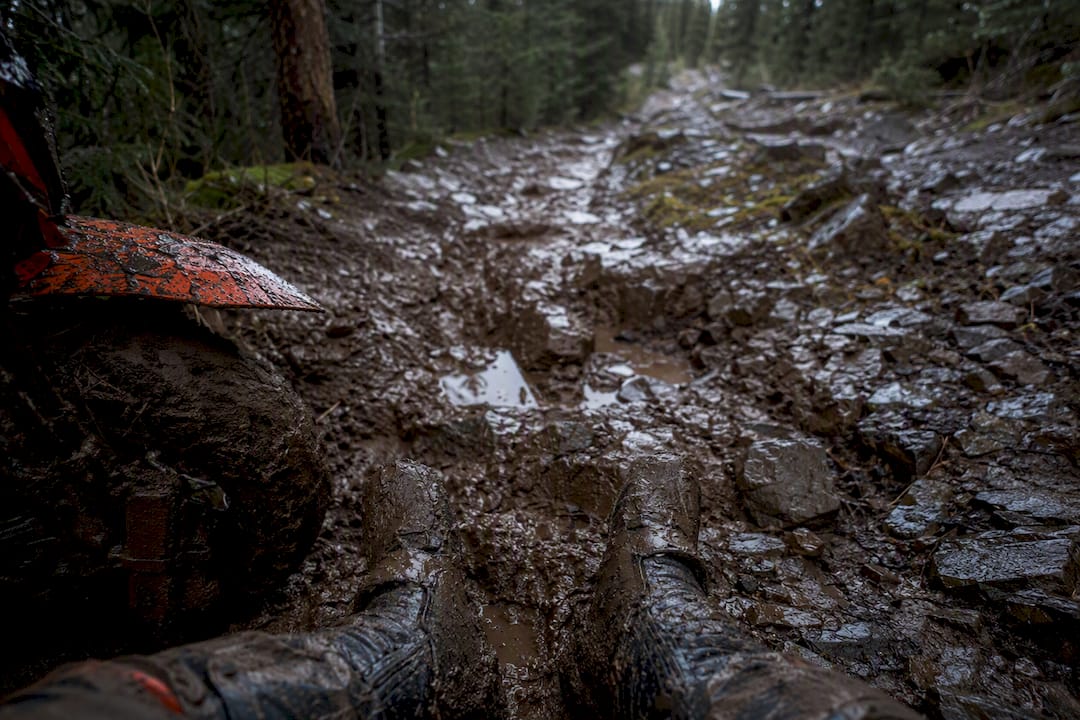
Severe use changes the math entirely. If you’re consistently riding in mud, hauling heavy loads, running full throttle on rocky terrain, or operating in extreme heat or cold, cut those intervals shorter. A machine ridden hard through a wet spring season can need oil and belt inspections at half the normal interval, and manuals typically flag this with a “severe conditions” note that a lot of owners skip past.
What Fluids and Filters Need Regular Attention?
Engine oil is the one fluid every owner already tracks, but it’s not the only one keeping your CFMOTO alive. Use exactly the oil grade and viscosity your manual specifies. CFMOTO engines are tuned for particular oil chemistry, and substituting a cheaper grade because it’s “close enough” is how you shorten engine life.
- Engine oil and filter: Changed at every scheduled interval; never stretched past manual recommendations even if oil looks clean
- CVT and transmission fluid: Inspected for level and contamination at each periodic service; discoloration or a burnt smell means inspect sooner
- Final-drive fluid: Checked on UTVs and ATVs with shaft-driven rear ends, since this fluid takes a beating from water crossings
- Coolant: Replaced on the schedule your manual sets, and checked more often if you notice sweet-smelling residue near hoses or clamps
- Brake fluid: Swapped when it darkens or absorbs moisture, since brake fluid pulls water from the air over time regardless of mileage
- Air filter: Cleaned frequently in dusty conditions, sometimes every ride if you’re running dry trails, and replaced outright once the foam or paper element degrades
Dusty riding environments accelerate almost every one of these timelines. If you spend most of your season on dry, loose terrain, a filter and a mask like the ATV-UTV TEK dust mask both belong on your regular gear checklist, not just your maintenance one.
When Should You Inspect or Replace Your CVT Belt?
CFMOTO doesn’t publish a single hour count for belt replacement, and that’s not an oversight. Belt life depends almost entirely on how you ride. Belt life varies widely by rider behavior; moderate riders may get significantly more use out of a belt, while aggressive or severe use shortens belt life substantially…
Watch for slippage under acceleration, a burning rubber smell, unusual clutch noise, sudden power loss, or visible cracking and glazing on the belt surface. Any one of these means inspect now, not at your next scheduled service. Shops typically check belt tension and clutch operation during the break-in service, clean out the CVT housing, and measure belt width against spec.
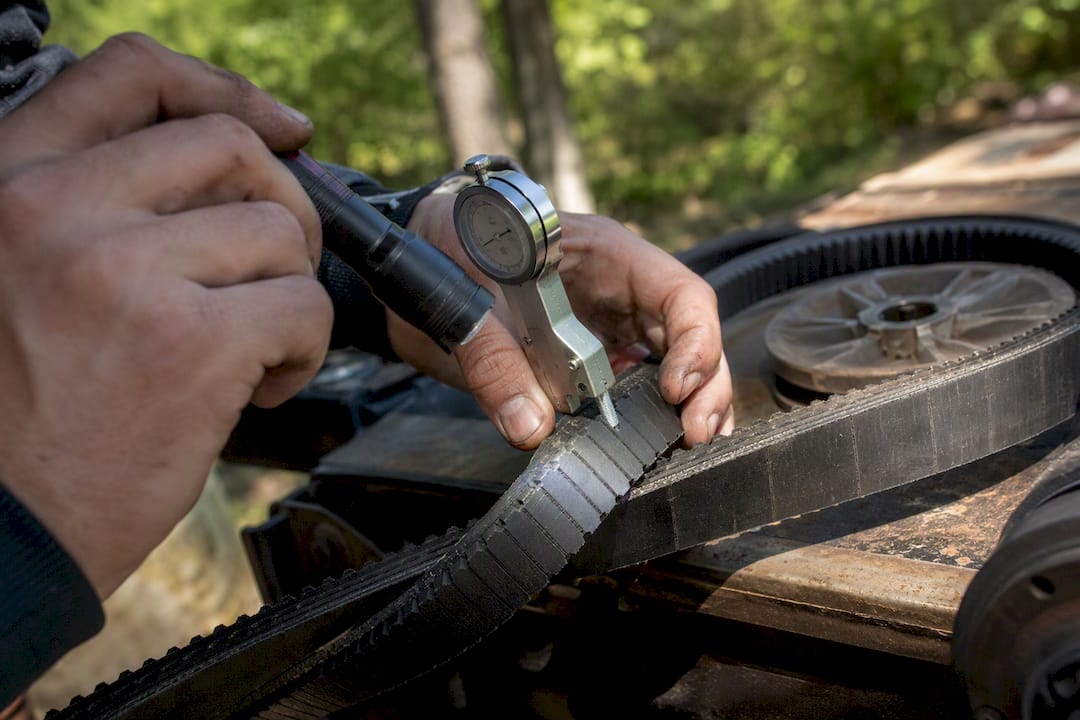
Pro Tip: Carry a spare belt and basic hand tools if you’re riding remote trails. Forum reports from CFMOTO owners describe trailside belt swaps as genuinely difficult without the right tools, so know your model’s process before you need it, not after.
How Often Do Valves Need Checking on a CFMOTO Engine?
Valve clearance sits toward the higher-mileage end of the periodic schedule, but it’s not optional. Manuals typically call for an initial valve check at a set hour or kilometer mark, then repeat inspections on a fixed cadence after that, according to CFMOTO’s UForce owner’s manual.
Watch for these warning signs between scheduled checks:
- Ticking or clattering noise from the top of the engine, especially at idle
- Noticeable loss of power or rough running that wasn’t there before
- Harder cold starts than usual
Valve adjustment requires precision measurement tools and, on most engines, partial disassembly. This is dealer-level work almost every time. Budget for it the way you’d budget for a transmission service on a car: infrequent, but not cheap, and not something worth attempting without the right feeler gauges and torque specs in hand.
Why Dealer Service Records Matter More Than You Think
CFMOTO’s own guidance is direct on this point: authorized dealer service protects your warranty and keeps accurate records of what’s been done and when. A missed stamp on a service record can turn into a denied warranty claim months later, even if the work itself was done correctly.
Keep a simple log yourself, separate from whatever the dealer tracks:
- Date of each service and the odometer or hour-meter reading
- Parts replaced, including brand and part number for filters, belts, or fluids
- Any dealer stamps or digital service confirmations
Leave major repairs, valve adjustments, and anything warranty-related to an authorized shop. DIY work is fine for oil changes, filter swaps, and visual inspections, but the moment a job touches something covered under warranty, dealer paperwork is what protects you if it fails later.
How Dirty Birdy Powersports Keeps Your Service Records Straight
Dirty Birdy Powersports operates as an authorized CFMOTO dealership, which means every service performed carries the documentation CFMOTO expects for warranty coverage. That matters more than most new owners realize until they need a claim honored.
- Full CFMOTO sales lineup at MSRP, with no dealer markups added
- Nationwide delivery across Canada for both machines and parts
- In-person service backed by riders who use the same machines they sell
- Over 200 completed deliveries and a 5.0 Google rating from customers
Every service visit gets logged and stamped according to CFMOTO’s warranty requirements, so your maintenance history stays intact whether you bought locally or had a machine shipped. That paper trail is exactly what protects you if a covered part fails two seasons down the road.
Priorities for Seasonal Riders and Anyone Riding Hard
Start each season with fluids, battery charge, tire pressure, and a belt inspection before the first real ride. After any stretch of heavy use, mud, or dust, clean out the CVT housing, check the air filter, inspect brake pads, and re-lubricate cables and pivot points.
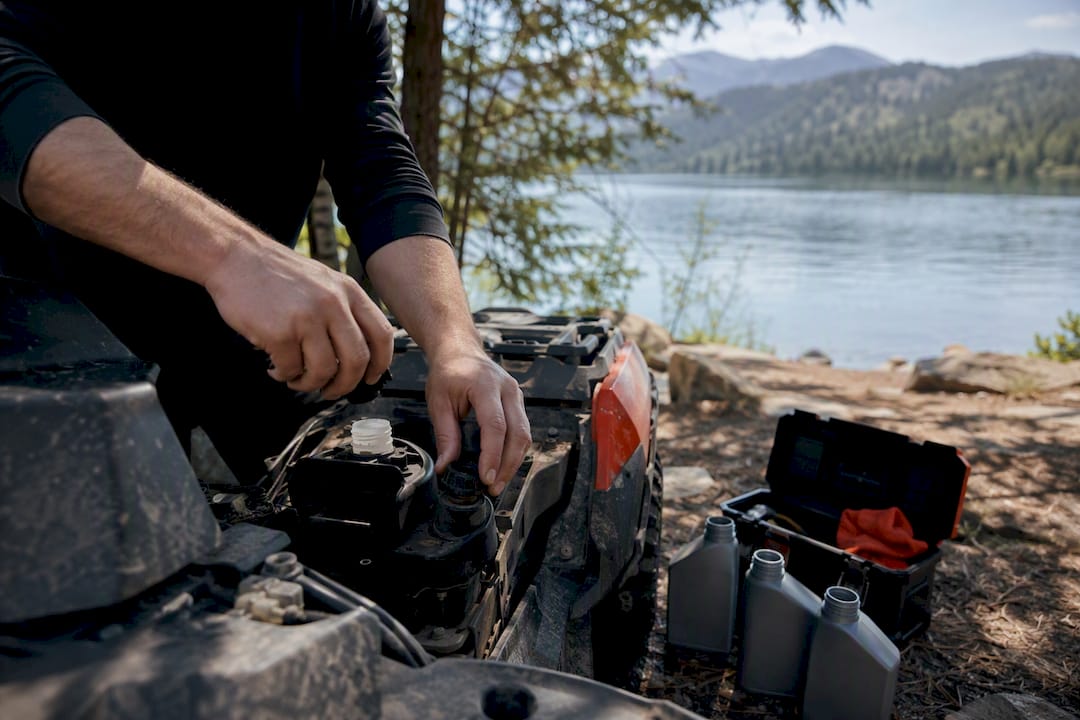
Safety systems come first, always: brakes, tires, lights. Drivetrain and longevity items, belts, filters, valve checks, come second. That order keeps you safe now and keeps repair bills lower later.
What Actually Separates Careful CFMOTO Owners From the Rest
Most riders treat maintenance schedules as a chore to survive, not a system to understand. That’s backwards, and it costs money over time. The owners who get the longest life out of a CFMOTO machine aren’t the ones who spend the most on parts. They’re the ones who read the icon key in their manual once, understand what CF, R, and CL actually mean on that table, and then act on it consistently instead of guessing.
There’s also a quiet myth worth pushing back on: that belt life and valve intervals are fixed numbers you can memorize and forget. They’re not. They’re starting points that shift based on how you actually ride, and the owners who ignore that distinction are the ones posting on forums asking why their belt failed at half the mileage everyone else got. Read your conditions honestly. If you ride hard, service hard. If you ride easy, you still can’t skip calendar-based checks just because the odometer looks fine.
The other overlooked piece is documentation. Plenty of owners do the maintenance but never keep records straight, then get surprised when a warranty claim gets questioned. A five-minute log after every service visit is cheap insurance against a fight you don’t want to have later.
— Dirty
Book Your Next CFMOTO Service the Right Way
Keeping a CFMOTO on its official schedule gets a lot easier when the dealership handling your service is also the one that sold you the machine at a fair price. Dirtybirdypowersports is the alternative to guessing your way through maintenance or hunting for a shop that actually stocks CFMOTO parts: authorized service, OEM parts availability, and warranty documentation handled properly, all from a dealership that delivers nationwide across Canada.
Whether you need a routine oil and filter service, a belt inspection before riding season, or new tires like the Braven Hellhound Uber XOR radials before your tread wears past safe limits, Dirty Birdy Powersports handles the work and the paperwork together. Visit Dirtybirdypowersports to book a service appointment or order OEM parts, and keep your CFMOTO’s warranty history exactly where it needs to be.
Where to Verify Your Model’s Exact Schedule
- CFMOTO’s revised maintenance schedule PDF lists tier-by-tier intervals
- The owner’s and service manuals page covers model-specific procedures and icon keys
Sources
Recommended
- Dirty Birdy Powersports | BC CFMOTO Dealer
- TF281201.F-I | CFMOTO UForce U10 PRO Front Forward Control Arms (Pre-I – Dirty Birdy Powersports
- TF281201.F | CFMOTO UForce U10 PRO Front Forward Control Arms (Non-Ins – Dirty Birdy Powersports
- TF281301 | CFMOTO UForce U10 PRO Lift Kit - 2 Inch – Dirty Birdy Powersports