

The VIN on most ATVs is stamped directly into the frame or printed on a metal plate or sticker, and it usually turns up in one of four spots: a front wheel well, a rear frame rail, under the seat, or near the steering head. Modern machines built after 1981 carry a 17-character VIN, so photograph it and copy it exactly once you spot it. If you want to confirm it’s legitimate, the NHTSA vPIC decoder will decode it in seconds, and an advisor experienced with these machines can walk you through it if the plate is worn or hidden under grime.
TL;DR:
- The most common VIN locations on ATVs are the front wheel wells, rear frame rails, under the seat, and near the steering head, with placement depending on the manufacturer and model year.
- A modern VIN must be exactly 17 characters long, exclude the letters O, I, and Q, and be verified using the NHTSA vPIC decoder to confirm vehicle details and recall status.
- If the VIN plate is obscured by grime or damaged, a soft brush and water can safely clean it without risk of damaging stamped numbers, ensuring easier identification.
- In cases where the VIN is missing or illegible, the owner’s paperwork and manufacturer records are primary sources, but altering or re-stamping the VIN yourself is illegal and should be handled by authorities.
- Prioritizing checked locations like the front wheel wells and rear frame rails before scanning less common areas saves time and aligns with manufacturer patterns.
Table of Contents
- Quick Checklist: Six Places to Check First
- Detailed VIN Locations By ATV Area
- How to Verify and Decode the VIN
- If You Can’t Find or Read the VIN
- Dealer Perspective: Recording and Using VINs
- Why Most VIN Guides Get the Order of Operations Wrong
- Sources
- FAQ
Quick Checklist: Six Places to Check First
Grab a flashlight and a rag before you start. Most VINs get lost under a film of mud, not because they’ve actually disappeared.
- Front wheel wells (left and right): Check inside the fender well and under the front rack, since this is the single most common spot on machines built in the last fifteen years.
- Rear wheel wells and rear frame rail: Look beneath or behind the rear tire, especially along the lower frame tube.
- Steering head area: Near the handlebars, sometimes hidden behind a plastic shroud you’ll need to pop off.
- Under or behind the seat: Lift the seat and scan the inner frame and any plastic panels tucked against it.
- Upper frame rail near the engine: Some models stamp the VIN on a cross-member close to the motor rather than out near the wheels.
- A dedicated VIN plate or sticker: Look for a small metal tag or statutory label riveted to a frame support or inner fender panel.
Pro Tip: If the plate is caked in dried mud, don’t scrape at it with a metal tool. A soft brush and warm water will lift the grime without scratching the stamped numbers underneath. Running the machine through a proper post-ride cleaning routine regularly keeps this from becoming a problem in the first place.
Detailed VIN Locations By ATV Area
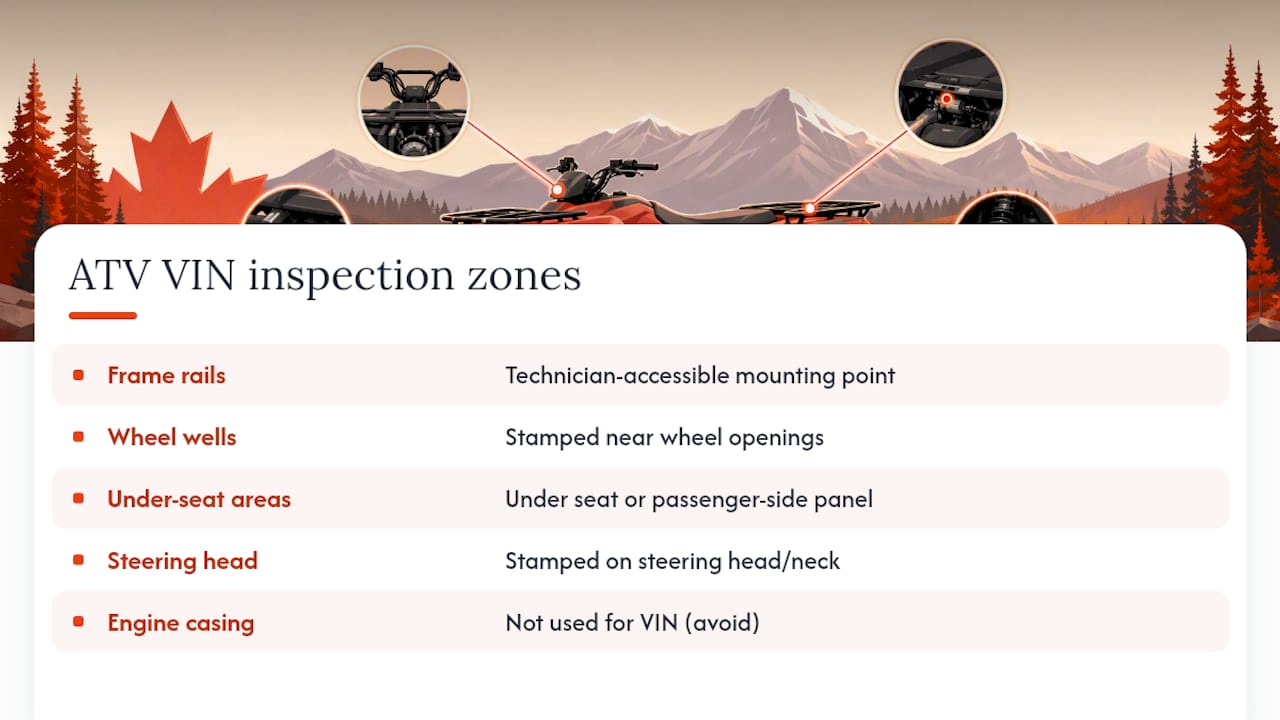
VIN placement isn’t random, but it also isn’t universal. Manufacturers tend to put the plate wherever a technician can reach it without pulling the machine apart, and that logic shifts depending on frame design, wheel size, and model year.
Frame rails
Stamping the VIN directly into a frame rail is still the most durable method, since a stamped number can’t peel off or fade the way a sticker can. It’s usually on the left or right rail, low to the ground, which means you’re often on your knees with a flashlight to read it. Low placement also protects the stamp from sun exposure that would otherwise bleach a sticker over a few seasons.
Wheel wells
Front and rear wheel well placement varies by brand and year, and this is where the differences actually matter. Polaris, for example, states that on model years 2011 and later, the VIN typically sits in the front left wheel well or on the back left lower frame rail, and that anything from 1997 forward carries the full 17-digit format. Other brands mirror that front-left tendency but move it to the rear on certain trims, so don’t assume one wheel well pattern applies to every machine in your garage.
Under-seat and passenger-side decals
This is common on UTVs and a fair number of ATVs, particularly where the seat lifts easily for storage access. Aftermarket resources documenting UTV identification note that VINs frequently show up stamped on frame rails beneath fenders or on plates tucked behind passenger-side components, which lines up with the broader pattern: manufacturers put the plate wherever a panel already comes off for routine service.
Steering head and headstock
Some models place the VIN near the steering head, which means you may need to remove a plastic shroud or cover to see it at the right angle. It’s not the most common spot, but it’s worth checking before you assume the VIN is missing entirely.
Engine markings versus VIN
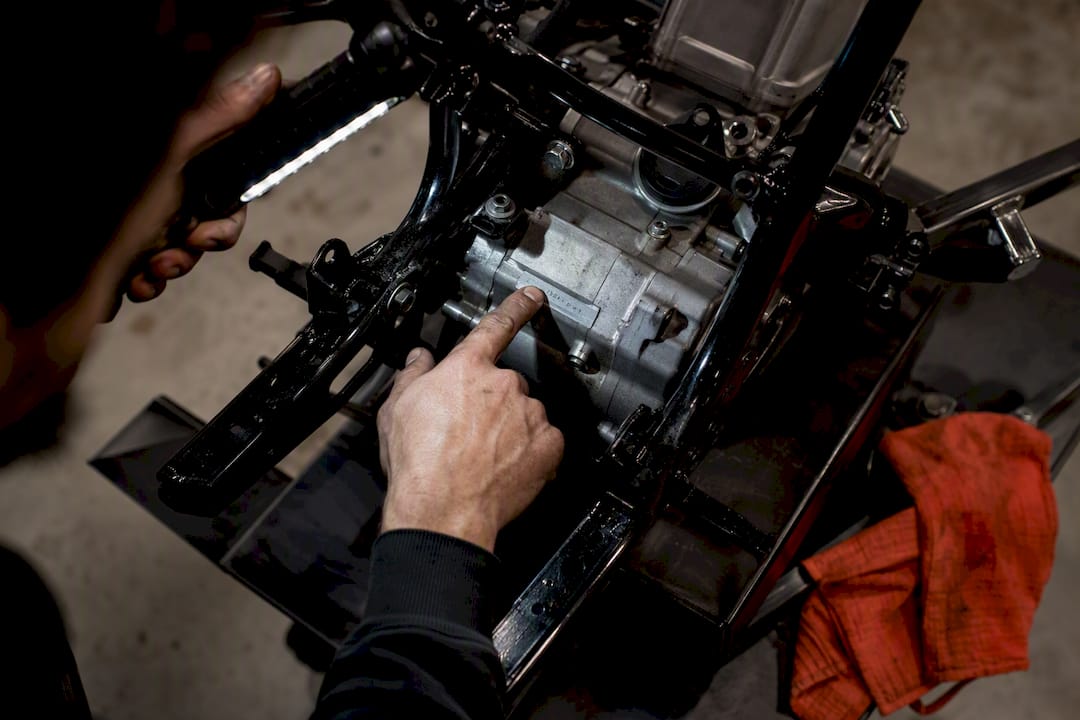
Do not confuse the engine serial number with the VIN. They live in different places and serve different purposes. The engine number sits on the engine casing itself, and it’s a shorter code that identifies the motor, not the vehicle. If a number you found doesn’t match the 17-character format, you’ve probably found the engine serial instead.
Statutory plates and model-year caveats
A statutory VIN plate typically looks like a small stamped or embossed metal tag, sometimes riveted rather than stuck on, and it’s usually mounted to an inner fender or a support tube. Older machines, particularly anything built before 1981, may use a shorter frame number instead of the full standard format. Anything newer follows the 17-character VIN convention, and if your specific model still isn’t matching what you’d expect, your owner’s manual or the manufacturer’s help center is the most reliable source for that exact model and year.
How to Verify and Decode the VIN
Once you’ve found a number, check the basics before trusting it. A valid modern VIN is exactly 17 characters, and it never contains the letters O, I, or Q, since those get confused with 0 and 1 too easily. If your number is shorter or longer, you’ve either misread a digit or you’re looking at something else, like the engine serial.
Run the number through the NHTSA vPIC decoder once you’re confident you’ve transcribed it correctly. This tool breaks the VIN into its World Manufacturer Identifier, model year, and basic vehicle attributes, and it’s free and public. This is the same underlying reference safety regulators use, which matters because the CPSC relies on VINs to identify affected machines during recalls, so an accurate VIN can flag whether your specific unit was ever part of a safety notice.
- Confirm the count: 17 characters, no spaces, no O/I/Q.
- Run it through vPIC to check WMI, model year, and basic specs.
- Cross-check any recall status against manufacturer or CPSC recall pages.
- Consider a VIN history lookup if you’re buying used, which can surface prior ownership or accident records.
Every modern ATV built after 1981 follows the 17-digit VIN standard that vPIC decodes, which is why that single tool covers the overwhelming majority of machines still on trails today.
Pro Tip: Photograph the VIN plate with your phone, then type it out separately in a note app. Comparing the photo against your typed version catches transcription errors before they cost you time on a failed lookup.
If You Can’t Find or Read the VIN
A worn or missing VIN plate isn’t a dead end, but it does need a methodical approach rather than guesswork.
- Check your paperwork first. Registration, the original bill of sale, insurance documents, and service records often list the VIN even when the physical plate is gone.
- Contact the manufacturer or an authorized dealer. Send clear photos of the frame and the engine serial number. A dealer can frequently confirm identity even from a partial or damaged stamp.
- Involve your registration authority or local police only when warranted. This applies if you suspect the VIN was tampered with, ground off, or if you have no supporting documentation at all.
- Never attempt to re-stamp or alter a VIN yourself. Replacement or re-stamping is a regulated process handled through your vehicle registration authority, not a DIY fix.
- Buying used? Insist the VIN appears in writing on the sale paperwork, and consider a professional inspection before you hand over payment.
Dealer Perspective: Recording and Using VINs
Photograph your VIN the day you take delivery, then keep a copy in your registration folder, your purchase receipt, and your phone. That triple backup has saved more than one customer a headache during a recall check or a resale. When we handle pre-delivery inspections and nationwide shipping paperwork, we log the VIN as part of the standard delivery record, so if a plate ever fades or gets buried in mud, we can usually confirm it from our own files rather than sending you off to guess.
Why Most VIN Guides Get the Order of Operations Wrong
Most advice on this topic buries the actual answer under three paragraphs of throat-clearing about what a VIN is. Readers searching for a VIN location already know what a VIN is. They’re on their knees next to a fender, phone flashlight on, trying to find seventeen characters before their lunch break ends.
The bigger gap in conventional advice is treating VIN location as universal instead of pattern-based. That’s why Polaris and other brands land in slightly different wheel wells depending on model year, and why chasing a generic answer wastes more time than checking your specific owner’s manual first.
If you take one thing from this guide, prioritize the front wheel wells and rear frame rail before anything else. That covers the majority of cases. Everything past that, steering head, under-seat panels, statutory plates, is a secondary sweep for the machines that don’t fit the common pattern.
— Dirty
Sources
FAQ
How can I search for an ATV VIN in Canada?
Check the physical VIN against your registration paperwork first, then run the number through the NHTSA vPIC decoder to confirm the World Manufacturer Identifier and model year match your machine.
How do I look up a four-wheeler VIN?
Locate the 17-character VIN on the frame, wheel well, or under the seat, then enter it into a VIN decoder like vPIC to pull basic vehicle attributes and check it against manufacturer recall pages.
Where can I find the VIN number on my Yamaha ATV?
Yamaha typically stamps the VIN on the frame near the steering head or in a front wheel well, though exact placement shifts by model year, so check the owner’s manual for your specific machine if the standard spots come up empty.
Where is the VIN located on a Can-Am ATV?
Can-Am generally places the VIN on the frame, often near a wheel well or along the lower frame rail, following the same industry pattern of stamping it wherever a service panel gives easy access.