

Yes, you can buy from a dealer in another province, and the deal itself is legal everywhere in Canada. The catch is that your home province still gets its sales tax and still decides how you register the vehicle. Before you sign anything, get the dealer to confirm in writing that they’ll provide a proper bill of sale, tell you whether they collect tax at the point of sale, and issue a transit permit so you can legally drive or ship the vehicle home.
TL;DR:
- Buyers should confirm in writing whether the dealer collects and remits tax at sale or if it is paid during registration, as models vary by province.
- The higher-of-price-or-wholesale-value rule applies in major provinces like Ontario, Quebec, and BC, which can negate bargain prices and increase tax bills.
- A safety inspection is mandatory in most provinces before registering the vehicle, costing between $75 and $400, and may reveal costly repairs or compliance issues.
- Out-of-province purchases should include a transit permit, interim insurance, and organized transport, with all documents kept together to avoid registration issues.
- Budget an extra 15% to 25% of the purchase price to cover taxes, inspection, repairs, and transport, since provincial rates and unforeseen costs can significantly raise expenses.
Table of Contents
- Steps to Buy a Vehicle From an Out-of-Province Dealer
- How Taxes and Registration Work Across Provinces
- Inspections and Compliance Before Your Vehicle Is Roadworthy
- Getting the Vehicle Home: Permits, Insurance, and Transport
- Budgeting the Real Cost of an Out-of-Province Purchase
- Dealer Purchase vs. Private Sale: What Actually Changes
- Dirty Birdy Powersports: How We Support Out-of-Province Buyers
- Your Pre-Registration Checklist
- Why the “Cheap Province” Myth Needs to Die
- Ready to Buy Across Provinces the Right Way?
- Sources
Steps to Buy a Vehicle From an Out-of-Province Dealer
Cross-border car shopping rewards preparation more than speed. Rushing the paperwork is how buyers end up stuck at the registry counter three weeks later, unable to plate a vehicle they already paid for.
- Before you commit: Run the VIN through a vehicle history report and a lien search, and ask the dealer directly how many out-of-province sales they process in a typical month.
- At the point of sale: Get a detailed, signed bill of sale, a clear tax receipt or written notation of tax status, and your temporary transit permit before you leave the lot.
- After the sale: Line up transport or drive it home, secure interim insurance, then book your home-province safety inspection and registration appointment right away.
Dealers who handle these sales regularly tend to have a repeatable process. Ones who hesitate or get vague about paperwork are telling you something worth listening to.
How Taxes and Registration Work Across Provinces
Here’s the part that trips up almost everyone: your home province taxes the deal, not the province where you bought the vehicle. Some dealers collect that tax at the counter and remit it on your behalf; others leave it entirely to you at registration. Ask which model applies before you sign, because it changes your cash flow at pickup.
The bigger surprise sits in how the tax gets calculated. Several provinces tax on whichever number is higher: the price you actually paid, or an official wholesale value pulled from sources like the Red or Black Book, ICBC’s valuation tool, or SAAQ’s own tables. Buy an underpriced vehicle in Alberta and register it in Ontario, and you may owe tax on the book value rather than your bargain price, quietly erasing the savings that made the trip worthwhile.
Tax-floor reality check: Three major provinces, including Ontario, Quebec, and BC, use the higher-of-price-or-wholesale-value rule. That means a “deal” in a low-tax province can cost the same in tax as a full-price purchase at home once you register the vehicle.
A few other things worth knowing:
- Provincial sales tax rates on vehicles typically run between 5% and 13% depending on where you register.
- Registration deadlines aren’t uniform. Some provinces give you roughly 30 days, others closer to 90 days, so confirm your window with your provincial Vehicle Registration Authority the day you buy.
- GST/HST applies on top of provincial tax in most cases, so budget for both layers, not just one.
Inspections and Compliance Before Your Vehicle Is Roadworthy
Almost every province requires a safety inspection before it will issue plates on a vehicle registered elsewhere, and the cost varies more than most buyers expect. Inspection fees generally land between $75 and $400, depending on the province and the vehicle type.
The bigger financial risk isn’t the inspection fee itself. It’s what the inspection turns up.
- A failed inspection can trigger mandatory repairs ranging from modest to significant amounts depending on the issues found.
- Emissions and safety standards differ slightly by province, so a vehicle that passed inspection where it was sold might still need work to meet your home province’s rules.
- If you can’t inspect the vehicle in person, hire a local mechanic in the selling province for a paid pre-purchase inspection, or use a transport provider that offers an inspection-on-delivery policy.
Pro Tip: Ask the selling dealer for the vehicle’s most recent inspection report before you finalize anything. A dealer with nothing to hide will hand it over without hesitation.
Getting the Vehicle Home: Permits, Insurance, and Transport
Once the paperwork clears, you’ve got two real options: drive it home yourself or have it shipped. Both need a legal paper trail before the vehicle touches a road.
- Get your transit permit first. These temporary permits typically cost $15 to $50 and are usually valid for about 10 days, just enough for a direct drive home.
- Arrange interim insurance. Some dealers coordinate temporary coverage as part of the sale; if not, call your insurer before pickup day, not after.
- Weigh drive versus ship. A short hop of a few hundred kilometers usually favors driving it home yourself. A cross-country purchase, especially in winter, often makes commercial transport the cheaper and safer call once you factor in fuel, lodging, and wear.
Whichever route you pick, keep the transit permit, insurance slip, and bill of sale together in the vehicle. A roadside check without them turns a routine trip into a real headache.
Budgeting the Real Cost of an Out-of-Province Purchase
The sticker price is the smallest number in this transaction. Build a full cost sheet before you agree to anything, because the gaps between provinces are where budgets blow up.
- Purchase price plus GST/HST plus your home province’s sales tax, calculated against whichever is higher: the price or the wholesale book value.
- Inspection fees and any repairs the inspection turns up.
- Transport costs, whether that’s fuel and lodging for a self-drive or a flat rate from a shipping company.
- Registration and plate fees, plus lien-search and history-report charges you paid earlier.
Budget rule of thumb: Add a contingency of 15% to 25% of the purchase price on top of your line-item estimate. That range covers the tax-floor gap, an unexpected repair, or a transport quote that comes in higher than expected. Provincial rates alone can swing between roughly 5% and 15%, so a thin buffer disappears fast.
Treat the wholesale value, not your negotiated price, as your true tax floor when you’re running these numbers. It’s the more conservative estimate, and it’s the one your registry office will actually use.
Dealer Purchase vs. Private Sale: What Actually Changes
A dealer and a private seller are not offering the same experience when the sale crosses a provincial line, even if the vehicle is identical.
- Dealers typically handle the bill of sale, issue the transit permit, and in some cases collect or remit tax directly, which reduces the paperwork sitting on your shoulders.
- A dealer with a track record also gives you recourse: a name, a business license, and a reputation to protect if something goes wrong.
- Private sellers rarely collect tax at all. You’ll pay it entirely at registration, and the same wholesale-value rule still applies whether you bought from a stranger’s driveway or a showroom floor.
- Whichever you choose, ask directly: “How many out-of-province sales have you completed, and what’s your process for tax and permits?” A confident, specific answer tells you more than any listing ever will.
Dirty Birdy Powersports: How We Support Out-of-Province Buyers
We ship ATVs, UTVs, and motorcycles across Canada regularly, and we’ve built our process around the exact friction points covered above. Buyers get a complete bill of sale, clear guidance on tax handling for their home province, and help to coordinate transit permits so nothing stalls at the registry counter. We also stock parts domestically so cross-border buyers aren’t stuck waiting on customs for a simple replacement part.
- Over 200 successful deliveries across Canada, backed by a 5.0 Google rating.
- A sales team made up of actual riders, not order-takers reading from a script.
- Every machine sold at MSRP, so there’s no markup to negotiate around before tax even enters the picture.
Pro Tip: Ask any out-of-province seller, us included, for a written tax estimate before you commit. It takes five minutes and eliminates the single most common surprise buyers run into at registration.
Curious how this looks in practice? Our dealership page outlines exactly how nationwide delivery works from quote to driveway.
Your Pre-Registration Checklist
Print this before you visit any out-of-province dealer or seller.
- Before signing: VIN check, vehicle history report, lien search, and written confirmation of the seller’s tax process.
- Right after purchase: Transit permit, interim insurance, transport arranged, originals of every receipt kept together.
- Inside your registration window: Safety inspection booked, documents brought to your provincial VRA, taxes paid, plates issued.
| Stage | Must-Have Documents | Typical Cost Range |
|---|---|---|
| Pre-sale | VIN check, history report, lien search | $15 to $50 |
| At sale | Bill of sale, transit permit | $15–$50 |
| Post-sale | Inspection, insurance, registration | $75–$400+ |
Why the “Cheap Province” Myth Needs to Die
The advice that circulates most about buying out-of-province is some version of “find the cheapest province and save on tax.” That advice is incomplete, and treating it as gospel is exactly how buyers get blindsided at the registry counter. Your home province decides your tax bill, full stop, and the wholesale-value floor means the sticker price you negotiated might barely matter once the paperwork catches up with you.
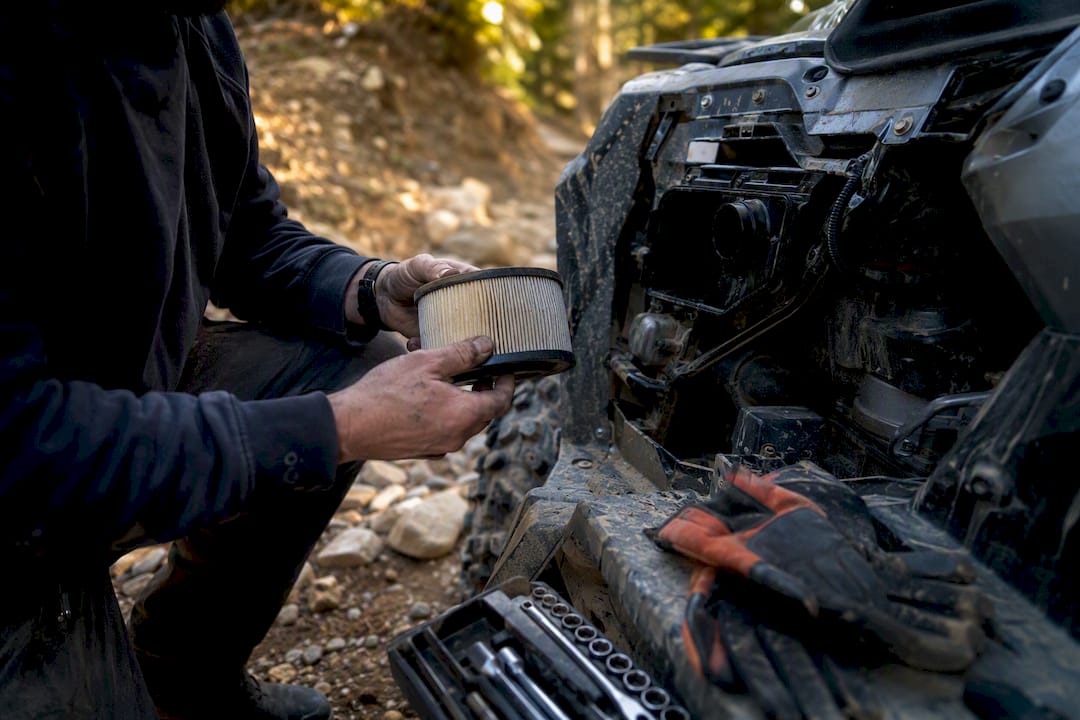
What the conventional advice skips is timing. Cross-province purchases are a multi-week project, not a same-day win, from lien searches to transit permits to booking an inspection slot that isn’t three weeks out. The buyers who come out ahead aren’t the ones who found the lowest advertised price. They’re the ones who called the dealer first, got a written tax estimate, and treated the registration deadline as a hard project milestone rather than an afterthought.
If there’s one thing worth prioritizing above the hunt for a deal, it’s dealer transparency. A seller who answers tax and paperwork questions specifically and immediately is worth more than a few hundred dollars of apparent savings from a vague one.
— Dirty
Ready to Buy Across Provinces the Right Way?
If you’ve made it this far, you already know the paperwork and tax math matter as much as the machine itself. Dirtybirdypowersports handles both sides of that equation for buyers anywhere in Canada, not just in British Columbia. We sell CFMOTO ATVs, UTVs, and motorcycles at MSRP with no markups, and we back that with nationwide delivery, a complete bill of sale, and straight answers about how tax applies in your home province before you commit to anything.
That’s the real difference between us and a random out-of-province listing: you’re not guessing about paperwork or chasing a dealer for a tax estimate after the fact. Once your machine arrives, our stocked parts and accessories catalog, including options like the Braven Hellhound Uber XOR ATV/UTV radials, means you’re not stuck waiting on cross-border shipping for the basics. Reach out for a written quote and tax estimate before your next machine purchase, and see exactly what you’d pay before you sign anything.
Sources
- Provincial sales-tax surprises when buying a used car across borders in Canada | Purr
- Buying a Car Out of Province – What You Need to Know | CARFAX Canada
Recommended
- Thumper Fab Parts in Canada — We Stock It, You Skip the Border – Dirty Birdy Powersports
- Can-Am Defender Half Doors (Single Cab / Front) – Dirty Birdy Powersports
- Can-Am Defender Forward Control Arms (62" Models)(PRE-INSTALLED) – Dirty Birdy Powersports
- Can-Am Defender FRONT Forward Control Arms (64" Models) Pre-Installed – Dirty Birdy Powersports