

Chain drive wins on performance and cost. Shaft drive wins on low-maintenance touring. If you race, ride dirt, or want cheap and easy final-drive tuning, chain is the better system. If you rack up highway miles and want to forget your final drive exists between oil changes, shaft has the edge. Belt drive splits the difference. The numbers below explain why.
TL;DR:
- Chain drives offer the highest efficiency at roughly 98%, but require regular cleaning, lubrication, and tension adjustments, which can be costly in the long run.
- Shaft drives are nearly maintenance-free day to day but tend to have higher repair costs when internal components like seals or gears fail, especially beyond 20,000 miles.
- Belt drives provide a middle ground, with around 95 to 97% efficiency, requiring less frequent upkeep than chains but limited gearing flexibility.
- The choice depends on riding style: chains suit sport and off-road bikes for performance and tuning, while shaft drives target long-distance touring riders seeking convenience.
- The cost of maintenance and repairs varies significantly: chains need replacement every 15,000 to 25,000 miles, belts between 20,000 and 40,000 miles, and shaft repairs can reach into hundreds of dollars if seals or bearings fail.
Table of Contents
- Chain vs Shaft Motorcycle: Comparing Efficiency, Maintenance, Weight, and Cost
- How Chain, Belt, and Shaft Drives Change the Way a Bike Handles
- What Chain, Belt, and Shaft Maintenance Actually Costs Over Time
- Matching Drive Type to Your Riding Style
- How to Choose Between Chain, Belt, and Shaft When Buying
- What Dirty Birdy Sees on the Service Floor
- The Real Trade-Off Nobody Wants to Say Out Loud
- Sources
Chain vs Shaft Motorcycle: Comparing Efficiency, Maintenance, Weight, and Cost
Every final drive loses some engine power before it reaches the rear wheel, and the amount lost varies more than most riders assume. Chain drives run at roughly 98% efficiency, belt drives sit around 95 to 97%, and shaft drives land closer to 93 to 95%, according to technical comparisons of the three systems. That gap sounds small until you’re chasing tenths of a second on a track or squeezing every mile out of a tank on a long ride.
Efficiency and upkeep don’t move together. The system that wastes the least power demands the most attention, and the one that asks the least of you gives back a few percentage points of power at the wheel.
- Chain: Highest efficiency, cheapest parts, but needs cleaning, lubing, and tension checks on a regular basis.
- Belt: Middle-ground efficiency, quieter and cleaner than chain, with fewer adjustments but almost no gearing flexibility.
- Shaft: Lowest routine efficiency, nearly maintenance-free day to day, but expensive when something inside actually breaks.
Maintenance frequency follows the same pattern. Chains want attention most often, belts fall in the middle, and shaft drives need the least routine care but carry higher repair costs when a seal or gear finally fails, according to maintenance comparisons from the Universal Technical Institute. Lifespan tells a similar story: a well-cared-for chain and sprocket set can run several tens of thousands of miles, belts often last longer, and shaft internals can go significantly farther between major service, though that assumes the seals hold up.
How Chain, Belt, and Shaft Drives Change the Way a Bike Handles
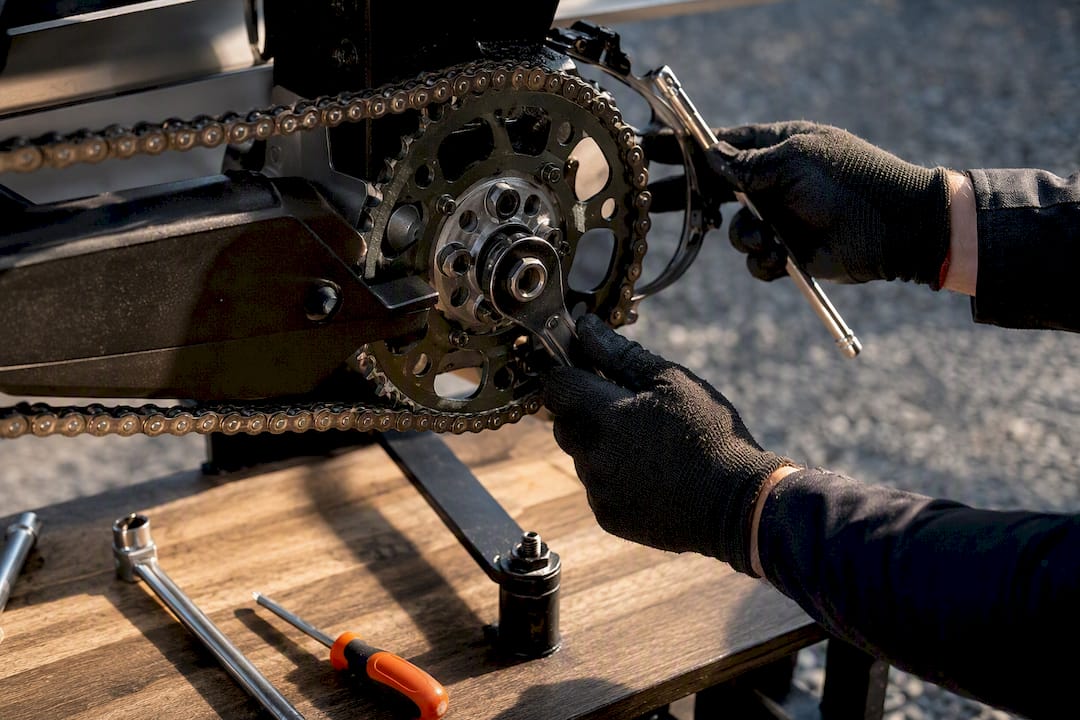
Chains respond instantly. There’s a directness to the power transfer that riders feel the moment they crack the throttle, which is part of why sport bikes and dirt machines almost universally run chain. Swapping a sprocket takes minutes and reshapes the whole gearing character of the bike, a flexibility racers and off-road riders rely on constantly.
Shaft drives behave differently under load. The enclosed gear assembly adds unsprung weight at the rear wheel, and torque reaction can cause the back end to rise or squat under acceleration, a mechanical quirk documented in drivetrain engineering analysis. BMW’s Paralever system and similar linkage designs cut that rise and squat down considerably, but they do it by adding mechanical complexity and a bit more weight rather than eliminating the reaction outright.
Belts sit in the middle for feel: less snappy than chain, smoother than shaft, and notably quieter than either.
- Chain: sharpest throttle response, most noise, easiest to modify.
- Belt: smooth power delivery, low noise, limited gearing options.
- Shaft: cleanest operation, some driveline lash, added rear-end weight.
Pro Tip: If you’re cross-shopping a shaft-drive tourer against a chain-drive sport bike, take both for a hard on-throttle roll from a stop. The rear-end squat on the shaft bike is obvious once you know to look for it, and it changes how you should trail-brake into corners.
What Chain, Belt, and Shaft Maintenance Actually Costs Over Time
Here’s what routine care actually looks like for each system, and where the money goes.
- Chain care: Clean and lube every 300 to 600 miles, check tension every fuel stop, and expect a full chain and sprocket replacement every 15,000 to 25,000 miles depending on riding conditions. Parts run $80 to $200 for a mid-range kit.
- Belt care: Inspect for cracking or debris every few thousand miles, adjust tension occasionally, and plan on replacement somewhere between 20,000 and 40,000 miles. Belts cost more upfront than a chain kit but need far less hands-on attention in between.
- Shaft care: Change final-drive oil every 10,000 to 20,000 miles per the manufacturer’s schedule, and otherwise leave it alone. The catch is that when a seal or bearing inside the housing fails, repairs get complex and expensive fast, often running into hundreds of dollars in labor alone.
Riding environment shifts all three numbers. Rain, road salt, and mud chew through a chain’s lubrication fast and can cut its lifespan by half if you skip cleanings. Off-road riding is brutal on both chains and belts, which is one reason shaft drives show up almost exclusively on street-oriented touring machines rather than dirt bikes. A CFMOTO-specific maintenance schedule is worth checking against your actual mileage rather than guessing at intervals.
Matching Drive Type to Your Riding Style
The right drivetrain depends less on which system is “better” and more on what you’re actually doing on the bike, a point echoed in expert breakdowns of drive system purpose.
- Chain fits: Sport bikes, dirt and dual-sport machines, and any rider who wants cheap gearing changes and maximum power transfer.
- Belt fits: Cruisers and commuters who want quiet, low-mess operation without shaft-level repair bills.
- Shaft fits: Touring and adventure riders logging big highway miles who’d rather skip weekly cleaning entirely.
If you split your time between weekend track days and long highway hauls, belt drive is often the practical middle ground: less fuss than a chain, less weight and expense risk than a shaft. Riders eyeing serious adventure touring machines tend to gravitate toward shaft-equipped models specifically because they don’t want to think about their final drive for weeks at a stretch.
How to Choose Between Chain, Belt, and Shaft When Buying
Work through this in order, and you won’t get talked into the wrong drivetrain.
- Decide your priority first: raw performance and tuning flexibility, minimal upkeep, or the lowest long-term cost. These three goals rarely point to the same drive type.
- Check service history on any used bike. Chain records should show regular lubes; shaft-drive bikes should have documented final-drive oil changes at the correct intervals.
- Inspect the chain or belt visually. Rust, tight spots, or cracked belt teeth are cheap to spot and expensive to ignore.
- Check shaft drive oil condition through the fill plug if accessible, and look for leaks around the rear drive housing and swing arm seals.
- Ask the seller or shop directly what a final-drive rebuild costs on that specific model. A vague answer is itself useful information.
Pro Tip: A shaft-drive bike with no maintenance records is a bigger red flag than a chain-drive bike in the same situation. A neglected chain is visible and fixable for under $200. A neglected shaft housing can hide a failure that costs far more to diagnose.
What Dirty Birdy Sees on the Service Floor
Most of the chain complaints we hear at the shop come down to skipped cleanings, not bad chains. Our 20-minute, no-stand chain-clean routine handles the job riders keep putting off, and it genuinely takes less time than most people assume.
- Common repairs we see: worn sprockets from stretched chains, dry-lubed chains that rusted after wet rides, and neglected tension adjustments.
- Touring and adventure buyers who ride year-round and don’t want a weekly maintenance habit often prefer shaft-equipped models.
- Performance-minded buyers often choose chain-drive machines when gearing flexibility matters more than convenience.
Want a service estimate for your specific model, whether it’s chain, belt, or shaft? Reach out to our team for a straight answer.
The Real Trade-Off Nobody Wants to Say Out Loud
Most drivetrain debates pretend there’s a universal winner. There isn’t, and pretending otherwise does riders a disservice. Chain drive wins on paper and in practice for anyone who cares about acceleration, tuning, or keeping repair bills low, but only if you’re honest with yourself about whether you’ll actually clean it.
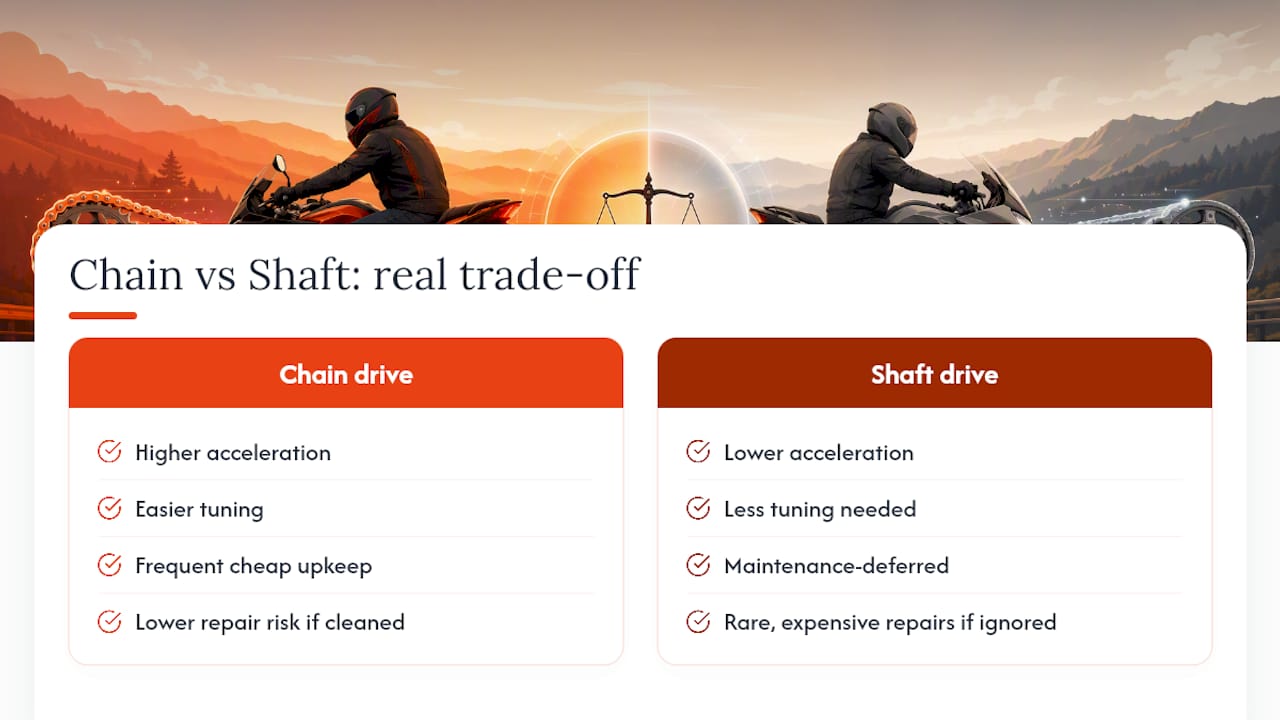
The conventional advice oversells shaft drive as “maintenance-free.” It isn’t. It’s maintenance-deferred. You trade small, frequent, cheap tasks for rare, expensive ones. That’s a fine trade for a rider doing 15,000 highway miles a year who never wants to touch a chain. It’s a bad trade for someone who’ll ignore the final-drive oil schedule for three years and then get hit with a four-figure repair bill.
If you’re picking based on how a bike feels rather than a spreadsheet, ride both. The rear-end squat on a shaft bike under hard acceleration is something you notice within the first mile, and no efficiency number captures that. Prioritize how you actually ride, not which system sounds lower-effort on paper.
— Dirty
Sources
- Motorcycle Final Drives: Chain, Belt & Shaft Explained | UTI
- Drive Systems | Motorcycle Mojo
- Shaft drive or chain drive — Motorcycle News
Riders shopping for gear to protect a bike with added rear weight, like a shaft-drive tourer, should also look into proper loading and handling technique before hauling it solo, since the extra mass changes how the bike balances on a ramp.