

Yes, in most cases you can avoid an arbitrary dealer markup by getting competing written out-the-door quotes, anchoring the entire negotiation to that final number, and being genuinely willing to walk away. The single best first move: email four or five dealers the same request for an itemized OTD price on the exact trim and VIN you want, then compare answers before you ever set foot in a showroom. Get pre-approved financing lined up before you go, and hold that card until price is settled.
TL;DR:
- Dealer markups typically range from 3% to 5% over invoice price, which can amount to $1,000 to $6,000 depending on the vehicle and trim.
- The out-the-door price should include all mandatory fees such as destination charges, taxes, and registration, with other costs like add-ons being negotiable.
- Obtaining competing written quotes from multiple dealers before visiting the showroom can significantly reduce or eliminate dealer markups.
- Negotiating the vehicle price separately from trade-in value and financing increases transparency and better controls overall cost.
- Some dealerships, like Dirtybirdypowersports in BC, sell at MSRP without added markups, exemplifying the potential for straightforward buying.
Table of Contents
- What Is a Dealer Markup (ADM) and Why Does It Happen in Canada?
- How Do You Read an Out-the-Door Price and Spot Hidden Add-Ons?
- How Do You Negotiate a Car Price Step by Step to Avoid Markups?
- Can Financing Strategy Stop a Dealer From Hiding a Markup?
- When Is Paying a Dealer Markup Actually Reasonable?
- What Does a No-Markup Dealer Look Like in Canada?
- A Dealer’s Honest Take on Beating Markups
- Buying a Powersports Vehicle Without the Markup Guessing Game
- Where to Verify These Numbers Yourself
- Sources
What Is a Dealer Markup (ADM) and Why Does It Happen in Canada?
A dealer markup, often labeled “ADM” (additional dealer markup) or “market adjustment,” is a line item some dealers add above the manufacturer’s suggested retail price. It can show up on the window sticker itself, in a supplemental sticker taped beside it, or simply appear as a higher number once you ask for a quote. Nothing in Canadian law forces a dealer to sell at MSRP. MSRP is a suggestion from the manufacturer, and dealers set their own retail price, which is exactly why identical trims can carry wildly different asking prices across a province.
Markups cluster around specific conditions rather than showing up everywhere at once.
- High demand, thin inventory: a new model launch or a popular trim with long wait times gives dealers room to add margin.
- Low Market Day Supply (MDS): when a model’s MDS, the number of days current inventory would last at the current sales rate, drops well below average, dealers know buyers have fewer alternatives.
- Regional scarcity: a vehicle that is common in Ontario might be scarce in parts of Atlantic Canada or the North, shifting leverage toward the dealer.
- Dealer discretion at the store level: some dealer groups add ADM as policy across an entire lot, regardless of demand, simply because enough buyers pay it without asking questions.
Mainstream vehicles in 2026 commonly transact somewhere around 3% to 5% over invoice, which can translate to $1,000 to $6,000 depending on the model and trim. That range gives you a real benchmark instead of guessing.
How Do You Read an Out-the-Door Price and Spot Hidden Add-Ons?
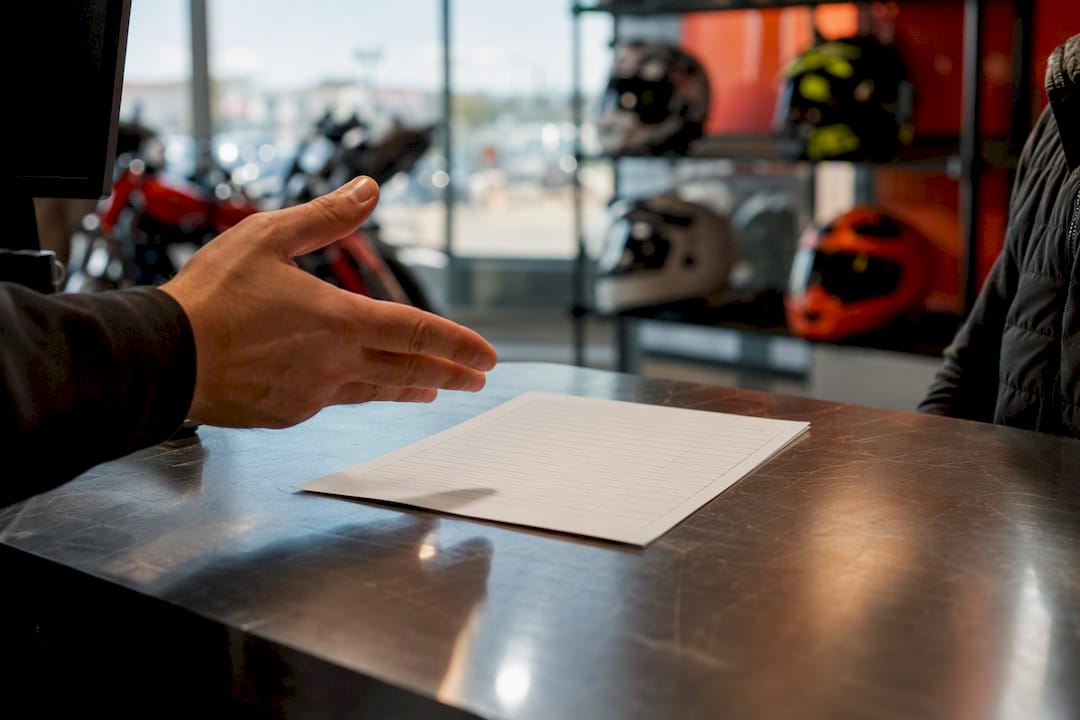
The out-the-door (OTD) price is the only number that matters, and it should include every dollar you’ll actually pay: the vehicle price, freight or destination charge, provincial sales tax or HST, GST where applicable, and government registration or licensing fees. Those charges are normally fixed and non-negotiable, and any dealer worth your time will break them out clearly rather than folding them into a single vague total.
What’s negotiable is everything else riding along on the invoice.
- Paint and fabric protection packages that add a few hundred dollars for a coating you could apply yourself for a fraction of the cost.
- VIN etching marketed as theft deterrence, usually worth removing or refusing outright.
- Upholstery or interior protection plans bundled in without a clear opt-in.
- Dealer-installed accessories you never asked for, quietly added to the build sheet before you arrive.
Consumer Reports treats every add-on as negotiable and advises buyers to ask for an itemized list and strike anything unwanted before signing. Watch also for the classic misdirection: a salesperson who steers the conversation toward “your monthly payment will only be $X” instead of the OTD total, or who lumps your trade-in value into the same number as the new vehicle price so you can’t tell what you’re actually paying for either one.
Pro Tip: If a dealer won’t give you the OTD price broken into separate lines in writing, that’s your answer about how they price everything else, too.
How Do You Negotiate a Car Price Step by Step to Avoid Markups?
A markup rarely survives contact with a buyer who has done the homework and has paper to back it up. This sequence works because it removes the dealer’s room to maneuver at every stage.
- Pin down the exact VIN, trim, and invoice price. Generic MSRP shopping gives a salesperson wiggle room; a specific VIN with a known invoice price and Market Day Supply figure does not.
- Email four to six dealers the identical request. Ask each for a written, itemized out-the-door price on that VIN, no phone calls required to get a number. Keep the wording the same across every email so responses are apples to apples.
- Let the quotes compete against each other. Reply to the highest quote with the lowest one attached and ask if they can match or beat it. Dealers regularly will, because an email-first, anchored approach creates real competitive pressure they can’t dismiss the way they might dismiss a walk-in.
- Lock the OTD price before discussing anything else. Get it confirmed in writing, then and only then move to trade-in value and financing as separate conversations.
- Negotiate trade-in and financing independently. Consumer Reports specifically recommends keeping these as distinct line items so a generous-sounding trade offer can’t quietly absorb a markup elsewhere.
- Set a walk-away threshold before you negotiate, and use it. If a dealer won’t move within that range, thank them and leave. Many will call back within a day or two once they realize you meant it.
- Time your visit for leverage. The last few days of a month or quarter often bring added pressure on sales staff to hit volume targets, which can soften a dealer’s stance on ADM.
- Widen the net if local supply is tight. A factory order or a search across a neighboring region sometimes beats waiting out a scarce model in your own city.
Can Financing Strategy Stop a Dealer From Hiding a Markup?
Financing is where a markup you thought you killed can quietly reappear. A dealer who can’t win on sticker price sometimes tries to recover margin through the loan itself, either by marking up the interest rate above what you’d qualify for elsewhere or stretching the term so the monthly payment looks painless while total cost climbs.
Walk in with a pre-approved rate from your bank or credit union, but don’t lead with it. Consumer Reports advises using pre-approval as a benchmark you reveal only after the OTD price is locked. That order matters:
- Settle the vehicle price first, in writing, with no financing discussion.
- Handle the trade-in next, as its own number.
- Bring up financing last, comparing the dealer’s offer against your pre-approval.
- Question any add-ons reintroduced at this stage, since the finance office is where extended warranties and protection plans tend to resurface.
Watch for dealer reserve, the spread a dealer earns by marking up your interest rate above the rate the lender actually approved. A longer loan term can also mask a markup that never got removed. Two vehicles with identical sticker prices can cost very differently once financing terms diverge.
When Is Paying a Dealer Markup Actually Reasonable?
Sometimes paying above MSRP is a rational choice rather than a losing one. If you need a vehicle immediately for a job, a move, or a family situation, waiting months for inventory to normalize might cost you more in rentals or lost time than the markup itself. A rare configuration, a specific color and options package with almost no other units available in your region, can also justify a premium if you genuinely can’t find it elsewhere. And in a market with severely constrained supply, the realistic choice may be pay more now or wait indefinitely.
Before agreeing to any markup, convert it into a real number you can compare.
- Add the markup to the loan amount and see what it does to your monthly payment over the full term.
- Calculate the extra interest paid on that markup amount across the loan’s life, not just the sticker impact.
- Estimate the effect on resale value, since a markup rarely comes back to you at trade-in time.
- Compare that total against the cost of a factory order or searching a wider radius, both of which routinely avoid the premium entirely if you have the patience.
What Does a No-Markup Dealer Look Like in Canada?
Dirtybirdypowersports, a CFMOTO dealership based in Squamish, BC, sells new ATVs, UTVs, and motorcycles at MSRP, with no market adjustment added to the sticker, and ships to buyers across Canada. That’s a direct, working example of the no-markup model this article has been describing rather than a theoretical one.
The dealership has completed over 200 deliveries and carries a 5.0 Google rating, backed by a team of riders who use the machines they sell rather than reciting spec sheets. Full CFMOTO parts and accessory support is available for buyers who want to customize after purchase rather than have options bundled in before they arrive.
Whatever dealer you’re evaluating, whether it’s this one or another, ask the same four questions before you commit:
- Will you provide an itemized OTD price in writing before I visit?
- Are all accessories and protection packages opt-in, not pre-installed on the build sheet?
- Can you document shipping and delivery fees separately from the vehicle price?
- Will you confirm the MSRP-to-invoice relationship on this specific unit if I ask?
A dealer who answers all four without hesitation is one worth doing business with.
A Dealer’s Honest Take on Beating Markups
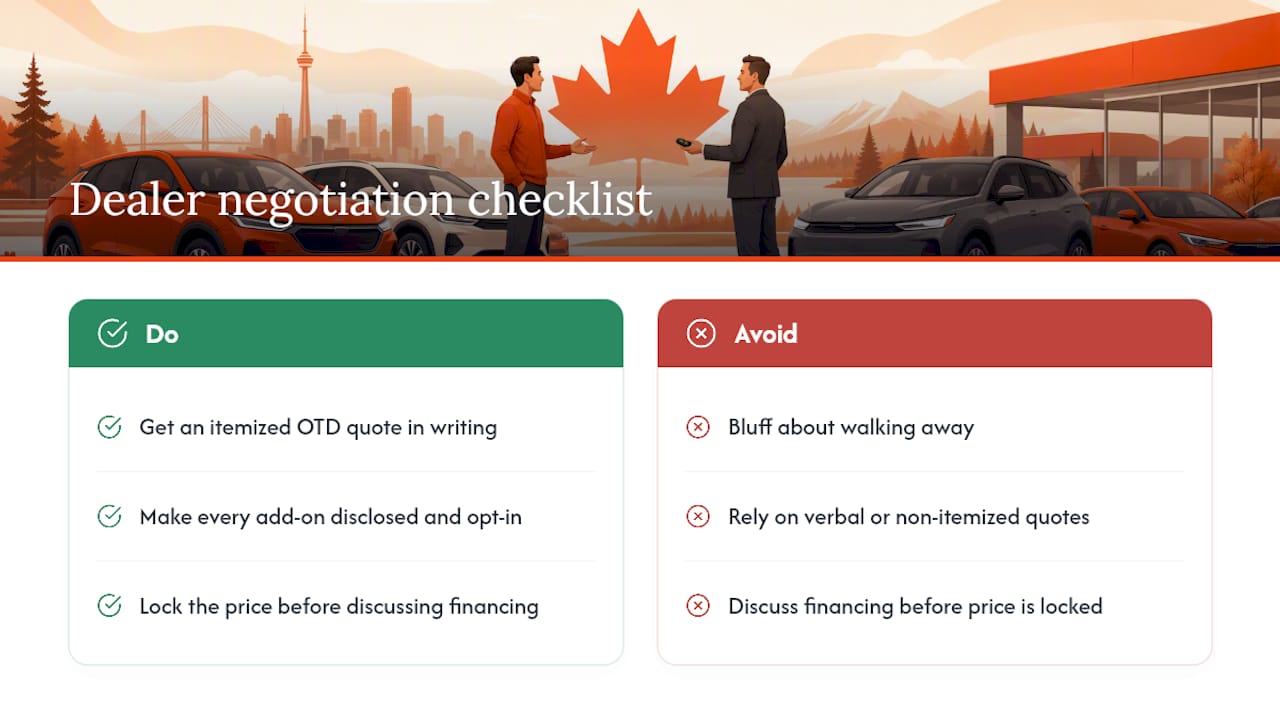
Written OTD quotes and a real willingness to walk change how a dealer treats you within minutes of the conversation starting. Salespeople can tell the difference between a buyer who’s bluffing and one who has three competing quotes printed out. The second buyer gets a different price, every time.
Most of the friction in car buying isn’t really about the vehicle. It’s about which side controls the pace and the paperwork. Three things I’d tell any friend before they walk into a dealership: get the itemized OTD in writing, make every add-on a disclosed, opt-in choice, and never let financing get discussed until price is locked. Skip any one of those and you’re negotiating with one hand tied behind your back.
— Dirty
Buying a Powersports Vehicle Without the Markup Guessing Game
Everything in this guide, written quotes, locked OTD pricing, refusing bundled add-ons, exists to solve a problem Dirtybirdypowersports has already removed from the equation. New CFMOTO ATVs, UTVs, and motorcycles are priced at MSRP, full stop, with delivery available anywhere in Canada, so there’s no markup to negotiate away in the first place.
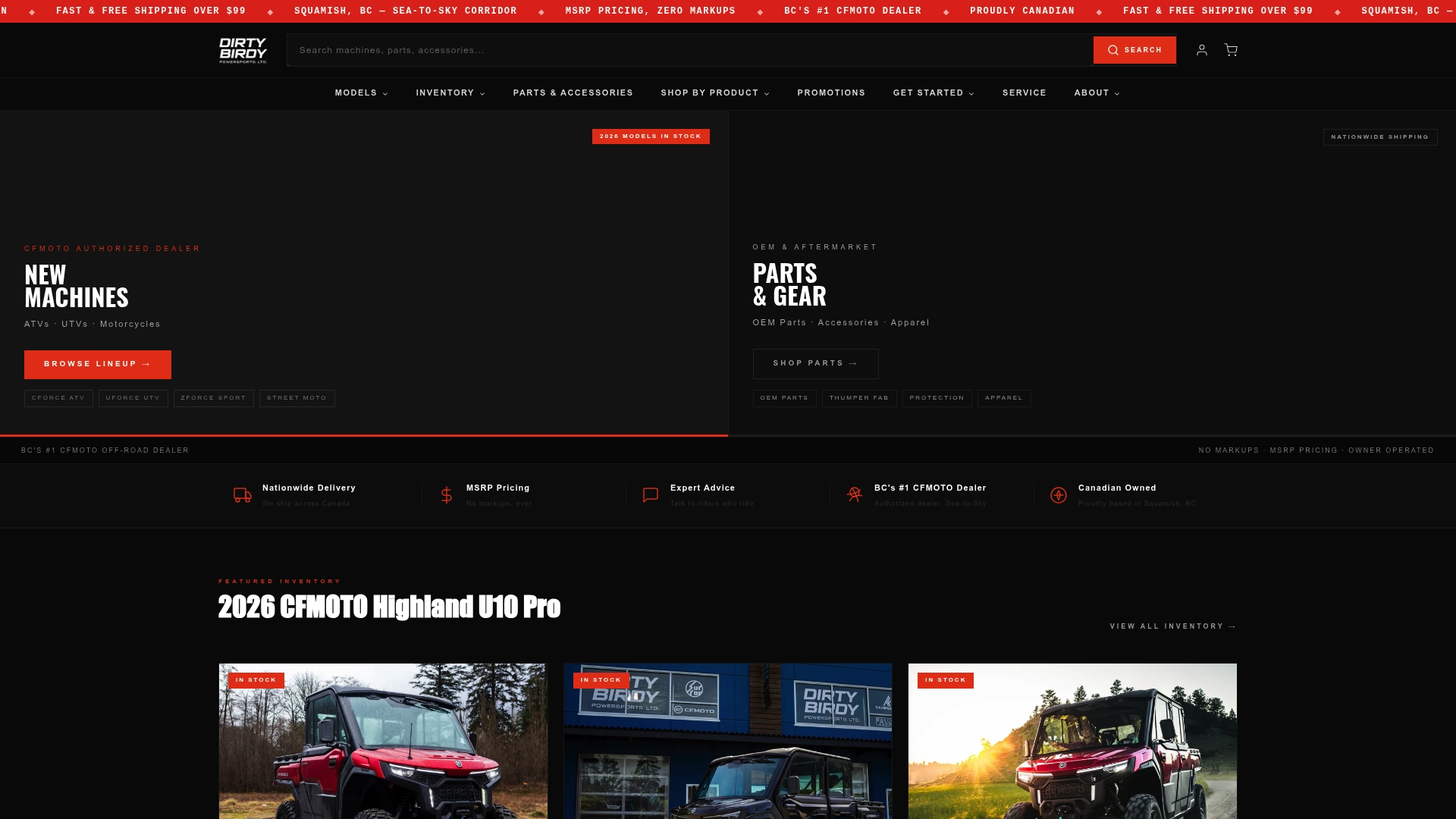
A purchase here comes with an itemized out-the-door price from the start, and accessories like the Braven Hellhound Uber XOR radials or a Defender long travel suspension kit are offered as opt-in extras, never quietly folded into the sticker. If you’d rather source basic detailing work independently instead of paying dealer rates for it, providers like GarageMap list local automotive detailing services across Alberta worth comparing. Browse current CFMOTO inventory at Dirty Birdy Powersports and request a written quote before you commit anywhere else.
Where to Verify These Numbers Yourself
The invoice and Market Day Supply figures cited above come from CarEdge’s 2026 dealer markup breakdown, which tracks how markups shift by model and trim. Consumer Reports backs the OTD-first negotiation order and the advice to refuse or question add-ons before signing anything. Kelley Blue Book explains how market adjustments physically appear on window stickers and why checking dealer reviews before you visit matters. Each source supports a different piece of the playbook, and together they cover the numbers, the negotiation mechanics, and the red flags worth watching for.
Sources
- Here’s How Much Dealers Mark Up New Cars in 2026 - CarEdge
- How to get a great deal on your next new car - Consumer Reports
- How to negotiate a car price in 2026 (Beat MSRP by $1,800+) | CarSavr
- How to negotiate a new car price effectively - Consumer Reports
- How to Avoid Dealer Markups in 2025: Buyer Beware - KBB
Recommended
- Thumper Fab Parts in Canada — We Stock It, You Skip the Border – Dirty Birdy Powersports
- Can-Am Defender FRONT Forward Control Arms (64" Models) Pre-Installed – Dirty Birdy Powersports
- Can-Am Defender Half Doors (Single Cab / Front) – Dirty Birdy Powersports
- Can-Am Defender Forward Control Arms (62" Models)(PRE-INSTALLED) – Dirty Birdy Powersports