

The right ATV tire is defined by how well its tread pattern, size, and ply construction match your primary riding terrain. Get that match wrong and you lose traction, wear tires faster, and risk mechanical damage. Get it right and your machine handles better, lasts longer, and costs less to maintain. This guide covers every factor that matters: tread types, ATV tire sizes explained, construction choices, and maintenance habits that extend tire life across Canada’s varied trails, from British Columbia mud to prairie hardpack.
1. What are the main ATV tire tread patterns?
Tread pattern is the single most important factor in tire selection. It determines how your tire grips, sheds debris, and performs across specific surfaces.
The four core tread types are:
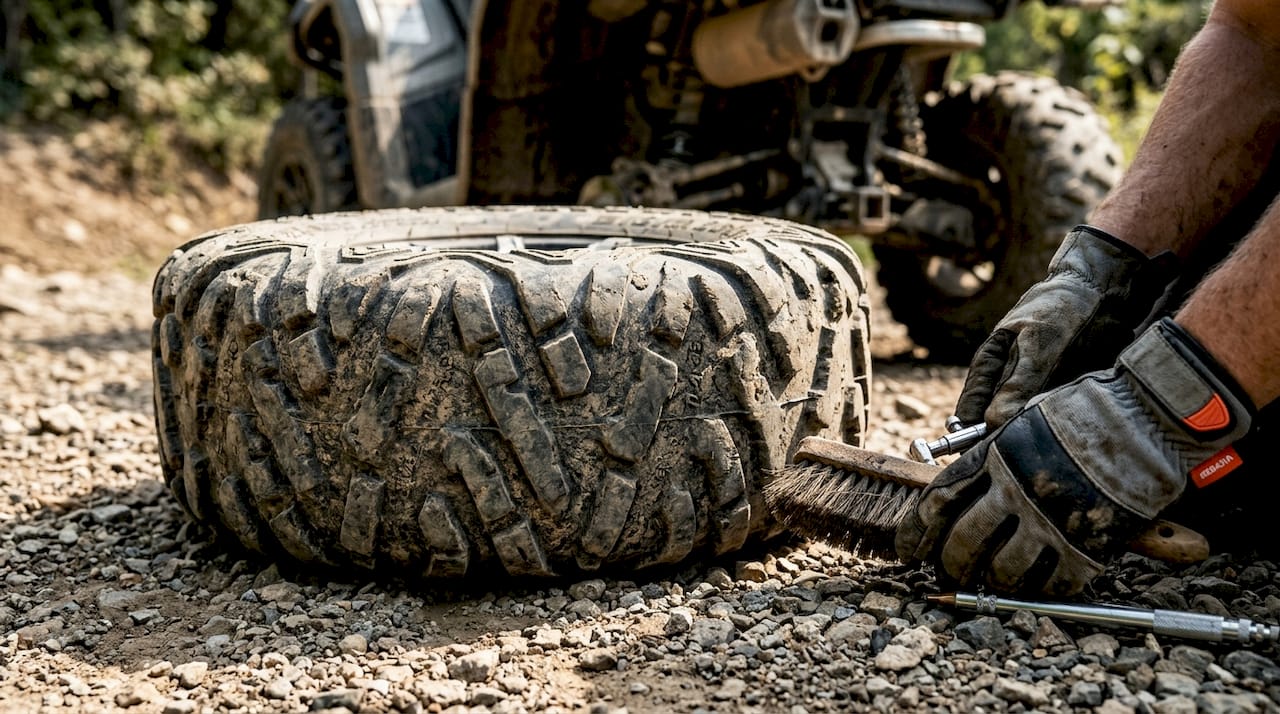
- Mud tires: Deep lugs of 1–1.5+ inches with wide spacing. The wide gaps let mud eject from the tire as it spins, keeping grip consistent. Best for swamps, bogs, and soft trail conditions.
- All-terrain tires: Medium lugs of 0.5–1 inch with moderate spacing. These handle mixed trails, gravel, and light mud without sacrificing too much on hard surfaces. The most versatile choice for riders who cover varied ground.
- Sand tires: Paddle or ribbed designs that create flotation on loose sand. The paddle design pushes sand backward to propel the machine forward rather than digging in.
- Hard-pack and racing tires: Shallow lugs of 0.25–0.5 inches with tight spacing. These maximize contact patch on groomed tracks and firm dirt, delivering fast, predictable cornering.
Self-cleaning tread designs are now standard on quality mud and all-terrain tires. The tread geometry actively sheds mud and debris during rotation, so grip does not degrade as conditions worsen.
| Tread Type | Lug Depth | Spacing | Best Terrain |
|---|---|---|---|
| Mud | 1–1.5+ inches | Wide | Soft mud, swamps, bogs |
| All-terrain | 0.5–1 inch | Moderate | Mixed trails, gravel, light mud |
| Sand | Paddle/ribbed | Variable | Dunes, loose sand |
| Hard-pack/racing | 0.25–0.5 inch | Tight | Groomed tracks, firm dirt |
Pro Tip: If you ride one terrain type more than 80% of the time, buy a tire built specifically for that surface. A specialized tire always outperforms a compromise tire on its home ground.
2. How to read ATV tire sizes explained
ATV tire sizing uses two formats, and confusing them leads to fitment errors. Both formats appear on sidewalls and product listings.
Standard inch format: A size like 25x8-12 reads as 25 inches overall diameter, 8 inches wide, and 12 inches rim diameter. This is the most common format for ATV tires sold in North America.
Metric format: A size like 255/65R12 reads as 255mm wide, 65% aspect ratio (sidewall height as a percentage of width), and 12-inch rim diameter. The “R” indicates radial construction.
The rim diameter number is non-negotiable. A 12-inch tire will not seat on an 11-inch or 13-inch rim. Overall diameter and width have more flexibility, but both affect handling and clearance.
| Size (Inch) | Overall Diameter | Width | Rim Size | Typical Use |
|---|---|---|---|---|
| 22x7-10 | 22 in | 7 in | 10 in | Youth, trail |
| 25x8-12 | 25 in | 8 in | 12 in | Sport, all-terrain |
| 27x9-12 | 27 in | 9 in | 12 in | Utility, light mud |
| 30x10-14 | 30 in | 10 in | 14 in | Mud, heavy-duty |
Upsizing tires adds ground clearance and a more aggressive look. The risk is real, though. Upsizing without checking clearance causes rubbing against fenders, struts, and tie rods, which leads to drivetrain wear and handling problems. Always verify wheel well clearance before going more than one inch larger in diameter.
Common sizing mistakes to avoid:
- Mixing inch and metric formats when comparing sizes
- Ignoring aspect ratio changes in metric tires, which alter overall diameter
- Assuming the same rim size means the tire will fit without rubbing
- Skipping a test fit before final installation
Pro Tip: Measure your current tire’s overall diameter with a tape measure before ordering a replacement. Manufacturer specs and actual worn dimensions often differ by half an inch or more.
3. Radial vs. bias-ply construction and ply ratings
Tire construction affects ride feel, durability, and the kind of abuse a tire can absorb. The two main types are radial and bias-ply, and each suits a different riding style.
Radial tires deliver better ride comfort and handling at speed. The internal cords run perpendicular to the direction of travel, which allows the sidewall to flex independently of the tread. That flexibility absorbs trail vibration and improves steering response on faster, smoother terrain. The Braven Hellhound Uber XOR® radials are a strong example of this construction applied to demanding mixed terrain.
Bias-ply tires have cords that run at an angle across the tire, creating a stiffer sidewall. That stiffness resists punctures and cuts from rocks and roots. Riders who spend time on sharp, rocky terrain favor bias-ply for this reason.
Ply ratings indicate the number of reinforcement layers in the tire carcass:
- 4-ply: Light and flexible. Suited for sport riding and smooth trails.
- 6-ply: The most common all-around rating. Balances durability and ride quality for general trail use.
- 8-ply: High-durability construction for heavy loads, rocky terrain, and commercial use. Stiffer ride but significantly more puncture resistant.
Higher ply ratings also change tire pressure recommendations. An 8-ply tire runs at higher pressures than a 4-ply tire of the same size. Always follow the pressure range printed on the sidewall for your specific ply rating.
Pro Tip: For most Canadian trail riders, a 6-ply radial hits the best balance. It handles the mix of hardpack logging roads, rocky sections, and soft ground that defines riding in most provinces.
4. ATV tire maintenance tips that extend performance and safety
Tire pressure is the most underused performance tool available to ATV riders. It costs nothing to adjust and changes how your machine handles more than most riders realize.
Tire pressure ranges from 2 PSI to 12+ PSI depending on terrain and load. Running 2–4 PSI maximizes the contact patch for extreme grip in mud and soft ground. Running 5–7 PSI suits general trail riding with a balance of grip and stability. Running 8–12+ PSI suits hard surfaces, hauling loads, and road travel where a firm tire resists wear and rolls efficiently.
Tread inspection matters just as much as pressure. Check these points before each ride:
- Tread depth: Worn lugs below half their original height signal it is time to replace the tire.
- Sidewall condition: Look for cracks, bulges, or cuts. Sidewall damage is not repairable and creates blowout risk.
- Dry rot: UV exposure and age cause rubber to crack even on tires with good tread. Dry rot appears as fine surface cracks across the sidewall or tread face.
- Embedded debris: Rocks and sticks lodged in tread can work deeper over time and puncture the carcass.
Consistent maintenance prevents the two most expensive outcomes: premature tire replacement and trail-side failures. A tire that runs at the wrong pressure wears unevenly and loses traction before its tread is actually spent.
Pro Tip: Carry a small digital tire gauge and a portable inflator on longer rides. Adjusting pressure between trail sections takes two minutes and can transform handling on terrain changes.
Key takeaways
Matching tread pattern, size, and ply construction to your primary terrain is the single most effective way to improve ATV performance, safety, and tire longevity.
| Point | Details |
|---|---|
| Tread pattern drives terrain fit | Choose lug depth and spacing based on the surface you ride most, not appearance. |
| Rim diameter is fixed | Always match the tire’s rim diameter exactly to your wheel; other dimensions have more flexibility. |
| Ply rating affects pressure and durability | Higher ply ratings handle more load and puncture stress but require higher operating pressures. |
| Tire pressure is a free tuning tool | Adjusting PSI between 2 and 12+ changes grip and handling more than most riders expect. |
| Upsizing requires a clearance check | Verify fender, strut, and tie rod clearance before going more than one inch larger in diameter. |
What I’ve learned after years of watching riders pick the wrong tires
The most common tire buying mistake is choosing based on looks. Aggressive, tall mud tires look impressive in a showroom. On a hardpack trail or a gravel road, they buzz, wear fast, and handle poorly. I have seen riders spend good money on tires that made their machine worse for 90% of their actual riding.
My honest advice: know your terrain before you buy. Think about where you rode last season. If it was mostly logging roads with occasional muddy sections, an all-terrain tire serves you far better than a dedicated mud tire. If you are riding the Fraser Valley in spring, a mud-capable tire earns its keep.
Upsizing is the other trap. Bigger tires look great and do add clearance. But I have watched riders skip the clearance check and end up with a tire rubbing the fender on every hard turn. That wears through rubber and stresses the drivetrain in ways that show up as expensive repairs months later.
Tire pressure gets ignored more than anything else. Riders set it once and forget it. Dropping from 7 PSI to 3 PSI before a muddy section takes 90 seconds and can be the difference between getting through and getting stuck. It is the cheapest performance upgrade you will ever make.
Talk to someone who actually rides before you buy. A good dealer asks about your terrain, your machine, and how you use it. That conversation saves you from a tire that looks right but performs wrong.
— Dirty
Premium ATV tires for every terrain at Dirtybirdypowersports
Dirtybirdypowersports carries a full range of Braven radial tires built for the terrain conditions Canadian riders actually face, from coastal mud to rocky mountain trails.
The Braven Berserker M/T radials are purpose-built for mud and soft terrain with deep, self-cleaning lugs. For riders who need one tire to handle mixed conditions, the Braven Bloodaxe R/T hybrid radial balances all-terrain grip with durability. If puncture resistance is your priority on rocky ground, the Braven Ironside Cross-X radials deliver 8-ply construction at a fair price. Dirtybirdypowersports sells at MSRP with no markups, and the team rides the machines they sell. Fitment questions get real answers, not a sales pitch.
FAQ
What tread pattern works best for mud?
Mud tires with lug depths of 1–1.5+ inches and wide spacing deliver the best grip in soft terrain. The wide gaps shed mud actively during rotation, maintaining traction as conditions worsen.
How do I know what ATV tire size fits my machine?
Check your owner’s manual or the sidewall of your current tire for the size format. Match the rim diameter exactly, and verify fender and strut clearance before upsizing beyond one inch in overall diameter.
What PSI should I run on ATV tires?
Run 2–4 PSI for maximum grip in mud, 5–7 PSI for general trail riding, and 8–12+ PSI for hard surfaces or hauling loads. Always stay within the range printed on the tire sidewall.
Are radial or bias-ply tires better for trail riding?
Radial tires suit most trail riders because they offer better ride comfort and handling response. Bias-ply tires are the better choice for rocky, heavy-duty conditions where sidewall puncture resistance matters more than comfort.
When should I replace ATV tires?
Replace tires when lug depth drops below half the original height, when sidewall cracks or bulges appear, or when dry rot is visible across the tread or sidewall surface.